

Researchers identifies key gene combination to protect tomatoes from yellow leaf curl disease
The research team tested tomato plants against three begomoviruses that differed in virulence.
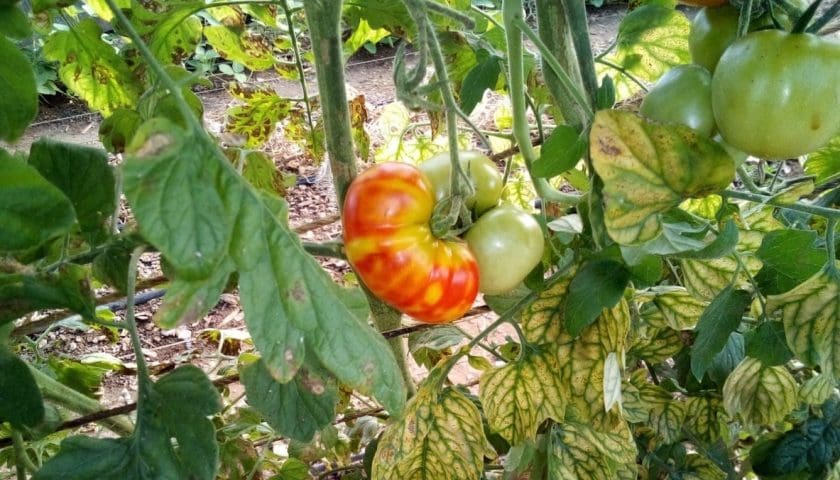
JAPAN – Researchers have determined that a specific combination of resistance genes can fully protect tomato plants against begomoviruses that cause tomato yellow leaf curl disease. This devastating condition severely reduces yields worldwide.
The study, led by Professor Sota Koeda at Kindai University and published in Euphytica, provides a blueprint for breeding more resilient tomato varieties without compromising fruit quality.
Tomato yellow leaf curl disease is a global problem in tomato production. While introducing resistance genes is one strategy to control the disease, a single Ty gene has proven inadequate against highly aggressive viral strains common in tropical Southeast Asia.
However, introducing too many resistance genes can also bring linked wild genomic regions that negatively affect cultivated tomato traits, a phenomenon known as linkage drag.
The research team tested tomato plants against three begomoviruses that differed in virulence. They found that AVTO1919, carrying two copies (homozygous) of the Ty-1 and Ty-6 genes, and AVTO1920, carrying two copies of the Ty-3 and Ty-6 genes, showed the greatest resistance, with no symptoms of infection.
By contrast, AVTO1701, which carried four Ty genes, did not show significantly better resistance than 1919 or 1920.
“Our study suggests that the introduction of fewer resistance genes than expected can substantially enhance resistance. It offers a promising approach for improving tomato varieties while balancing resistance, productivity, and fruit quality,” said Professor Koeda.
For African agriculture, this genetic breakthrough could transform food security. Tomatoes are a staple vegetable across the continent, eaten daily in sauces, salads, and stews.
Therefore, crop losses from yellow leaf curl disease frequently devastate smallholder farmers who lack access to costly chemical controls.
The economic benefits of reducing tomato crop losses are substantial. When viral outbreaks destroy fields, farmers lose their primary source of income for the season. While Processors face supply shortages, leading to factory idling. On the other hand, Retailers and food service operators contend with price spikes that squeeze margins.
“Overall, our findings may offer valuable guidance for enhancing begomovirus resistance in other crops and could contribute to the long-term, stable production of food,” said Professor Koeda.
For stakeholders in the global produce industry, this research offers a pathway to higher-yielding, resilient crops that retain essential market traits.
As virulent begomoviruses continue to threaten commercial tomato production in tropical regions, the Ty-1/Ty-3 and Ty-6 combination offers a practical, scalable solution.
Sign up HERE to receive our email newsletters with the latest news and insights from Africa and around the world, and follow us on our WhatsApp channel for updates.