

South African apples, pears exports grow despite Cape Town port bottlenecks
Export markets have diversified significantly beyond traditional European and UK destinations.
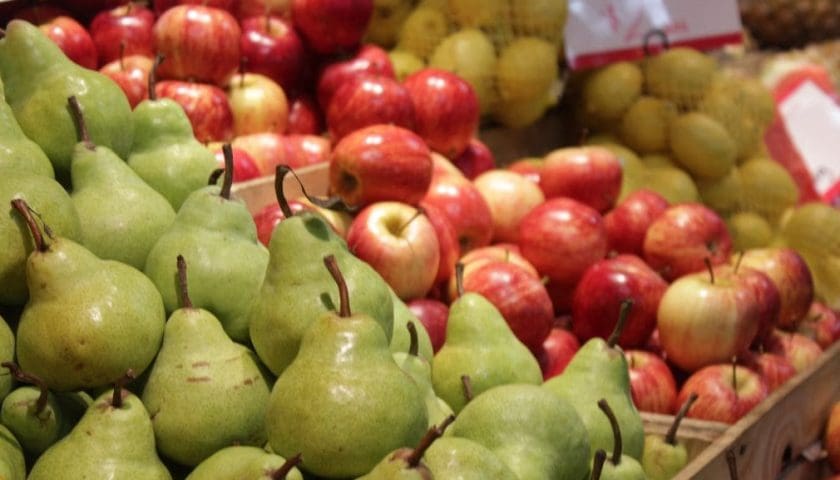
SOUTH AFRICA – South Africa’s apple and pear industry is achieving significant production gains through high-density planting techniques that have doubled orchard output in some cases, while exporters navigate persistent logistics constraints by diverting shipments from the Port of Cape Town to alternative gateways.
Calla du Toit, Procurement Director at Tru-Cape Fruit Marketing and a grower since 1997, described how the sector has evolved over three decades. “When you work with large supermarket programmes, the supply chain has to function perfectly. Once fruit is packed with a sell-by date, every hour matters,” he said.
Firstly, production systems have shifted toward higher-density plantings, new rootstocks, and protective structures, with some orchards increasing output from 40 or 50 tons per hectare to over 100 tons per hectare. Water management has also become central to production planning, with growers focusing on resource efficiency.
For investors, South Africa’s adoption of high-density systems, precision irrigation, and varietal development creates opportunities for equity partnerships, technology transfer, and joint ventures that apply similar models across African markets.
Secondly, export markets have diversified significantly beyond traditional European and UK destinations. Tru-Cape now exports to more than 105 countries, with markets such as India, Vietnam, Thailand, and China. Du Toit noted that this diversification has been essential as the industry manages shifting global trade dynamics.
Thirdly, logistics remain a persistent challenge. Exporters have diverted shipments from the Port of Cape Town to Durban and Port Elizabeth, a workaround that adds transport costs. “That comes at a cost, and ultimately the grower has to carry that cost,” du Toit said.
Lastly, collaboration among growers has increased over time, with more partnerships between producers and commercial entities. “Today, there is far more cooperation and information sharing,” du Toit explained. “Growers partner with one another and with commercial companies to remain competitive and negotiate better with global retailers.”
Additionally, the industry has also benefited from new talent entering the sector, “There has been an enormous amount of varietal development, and we have a lot of young, capable people bringing fresh energy to the sector,” du Toit said.
For African agribusiness, South Africa’s apple and pear sector offers a model of how strategic partnerships, varietal innovation, and operational flexibility can sustain global competitiveness.
The industry’s ability to simultaneously expand production through advanced systems while navigating infrastructure constraints demonstrates resilience that resonates across the continent’s fresh produce landscape.
Sign up HERE to receive our email newsletters with the latest news and insights from Africa and around the world, and follow us on our WhatsApp channel for updates.