
Vietnam’s Hoang Anh Gia Lai Group plans 20,000-hectare coffee plantation by 2028
HAGL plans a 20,000-hectare coffee plantation and new processing investments to strengthen its position in high-value coffee products amid rising global demand.
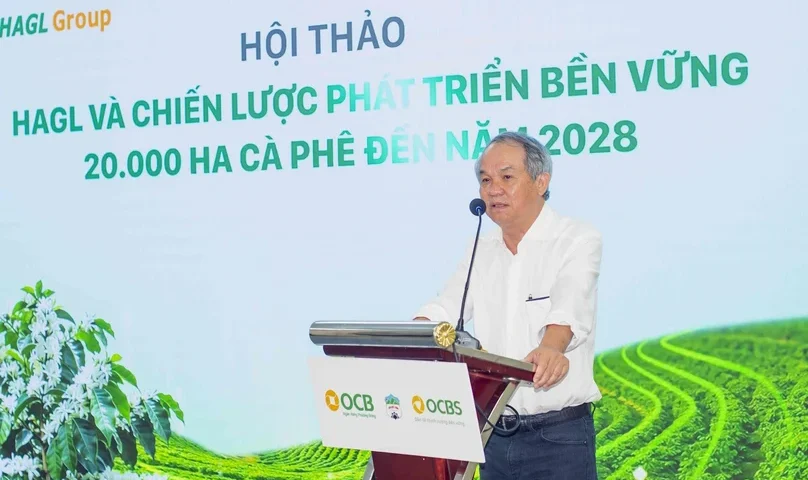
VIETNAM – Hoang Anh Gia Lai Group (HAGL) has announced plans to develop a 20,000-hectare coffee plantation by 2028 as part of a broader strategy to expand its role in the global coffee value chain and increase its focus on processing.
If completed, the plantation would become the largest directly managed coffee-growing area globally, surpassing estates operated by Horizon Plantations and Daterra.
The expansion comes as Vietnam’s coffee industry continues to grow. According to the Vietnam Coffee Cocoa Association, the country exported approximately 1.59 million tonnes of coffee worth about $9 billion in 2025.
Demand is also increasing in key markets. Coffee imports by China reached $2.07 billion in 2025, representing a 57% increase compared to the previous year.
Against this backdrop, Hoang Anh Gia Lai Group aims to move beyond exporting green coffee beans and expand into higher-value processing segments.
Under the plan, the company expects total revenue from its coffee business to reach nearly VND18.75 trillion (US$713.05 million). Green coffee beans are projected to account for 64.1% of revenue, equivalent to about $457.46 million.
Roasted and ground coffee products are expected to contribute 17.2% of revenue, or around $122.44 million, while refined products such as instant coffee and cascara tea are forecast to account for 18.7%, or approximately $133.23 million.
“Processed products are seen as key to stabilizing profit margins amid volatility in global commodity markets,” the company said.
To support its expansion strategy, Hoang Anh Gia Lai Group plans to invest more than VND1 trillion (US$38.04 million) in a processing facility designed to extract coffee essence from by-products, including approximately 72,743 tonnes of cascara, as well as fruit and husk residues.
Technical support for plantation development is being provided by the Western Highlands Agriculture and Forestry Science Institute (WASI), which is supplying hybrid coffee varieties.
The company said it plans to adopt high-density cultivation models, targeting around 4,700 trees per hectare for Arabica and 3,150 trees per hectare for Robusta.
Under the plan, annual fresh coffee output is expected to reach approximately 565,000 tonnes.
Paksong in Laos has been identified as a key cultivation area, with around 15,000 hectares allocated for Arabica plantations due to its high elevation and favourable climate conditions.
Hoang Anh Gia Lai Group added that the integrated farming model will incorporate traceability standards and emission reduction technologies to meet international supply chain requirements.
Sign up HERE to receive our email newsletters with the latest news and insights from Africa and around the world, and follow us on our WhatsApp channel for updates.