US port of Hueneme handles higher blueberry volumes as Peruvian imports surge 17%
The port is upgrading infrastructure to support refrigerated cargo through a US$250 million program.

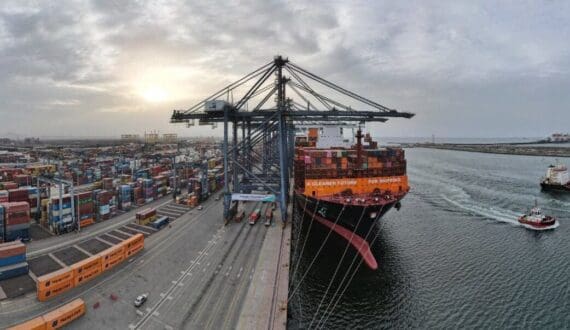
UNITED STATES – The Port of Hueneme has handled higher blueberry volumes as Peruvian imports surged 17%, boosting refrigerated cargo and revenue forecasts.
To begin with, massive growth in global blueberry imports is being driven by expanded production in Peru and strong US consumer demand.
According to Port CEO Kristin Decas, blueberry volumes rose by 17% this year and may increase by as much as 30% next year. One of the port’s customers is Driscoll’s, which imports blueberries via Hueneme.
Decas noted that blueberries can exceed bananas in cargo value in certain months. The port now handles containerized shipments for banana imports from Chiquita, Del Monte, and Dole, with refrigerated container traffic increasing steadily since 2012.
As a result, the port is upgrading infrastructure to support refrigerated cargo through a US$250 million program.
Additionally, key projects include hybrid electric mobile cranes, reefer plug expansion, rail development, and electrification projects. These enhancements are designed to accommodate rapidly increasing volumes of perishable goods, with the port forecasting container volumes of around 265,000 TEU this year, approximately 3% above last year’s level.
Peru has become a major blueberry producer thanks to favourable growing conditions, investment in premium varieties, and export-oriented farming systems. “We’ve seen explosive growth in the blueberry market and production,” Decas said.
Moreover, the port introduced a liner service with Maersk in 2016 to support the trade lane. Peruvian blueberries now flow through Hueneme alongside traditional banana imports. The port’s position as the fifth-largest refrigerated cargo port in the United States reflects this shift towards containerized shipping from breakbulk reefer vessels.
The US$250 million investment signals confidence that banana and blueberry imports will continue to grow, with implications for MEA exporters targeting the US market. Therefore, competing with Peruvian blueberries requires equivalent attention to variety development, cold chain integrity, and consistent supply.
On the other hand, the 17-30% annual growth range for blueberries indicates that the category is not yet saturated, offering potential entry points for MEA producers who can meet US phytosanitary standards and retail quality requirements.
The Port of Hueneme is not just responding to growth; it is anticipating it through deliberate, multi-year capital planning.
The difference between leading and following in the fresh produce trade is often visible in crane technology and reefer plug counts. Hueneme is leading. The question is who will follow, and how quickly.
Sign up HERE to receive our email newsletters with the latest news and insights from Africa and around the world, and follow us on our WhatsApp channel for updates.