

Atlantic Fish Co raises US$1.2M to advance cultivated seafood, regulatory plans
The North Carolina company secures new funding to refine its cell-based whitefish and prepare for FDA submission.
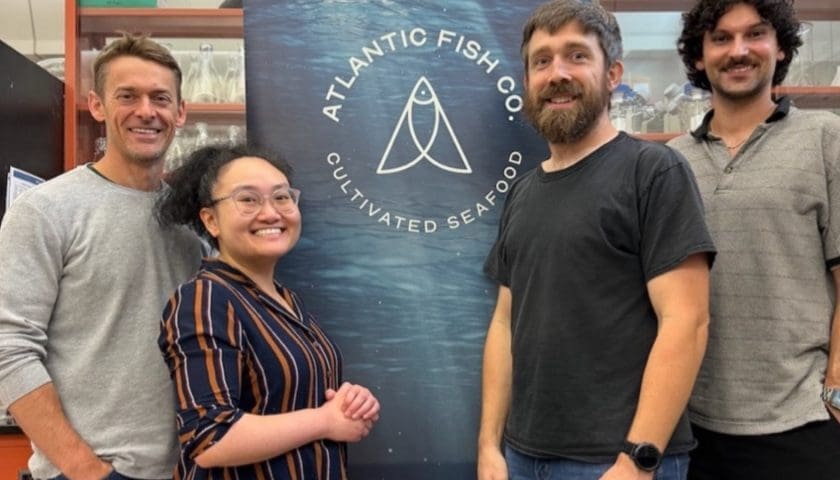
USA – US-based food technology company Atlantic Fish Co has raised US$1.2 million in new funding to further develop its cultivated seafood products and move toward regulatory approval in the United States.
The seed round includes investments from Katapult Ocean, Alwyn Capital, DMV Capital, and the Georgetown Angel Investment Network, alongside a US$305,000 Small Business Innovation Research grant from the National Science Foundation.
With the new funding, the company’s total raised capital now stands at US$2.3 million, which will support its ongoing product optimization, regulatory preparations, and early commercialization efforts.
Co-founder and CEO Doug Grant said the investment would help the company finalize its market-ready product and obtain the necessary regulatory clearances for launch in the US.
Founded in 2022 by Grant and chief scientific officer Trevor Ham, the North Carolina-based startup is developing a cell culture platform capable of working across multiple species.
Its current focus is on cultivated whitefish, particularly black sea bass, using a process that begins with a small muscle sample from live fish, from which healthy cells are isolated and grown in a bioreactor.
These cells are fed with nutrients similar to what fish receive naturally, allowing them to grow into structured muscle tissue that mimics conventional seafood fillets.
Atlantic Fish Co’s cultivated fish aims to eliminate contaminants commonly found in ocean-caught seafood, including mercury, microplastics, antibiotics, and parasites.
The company created its first black sea bass prototype in collaboration with the North Carolina Food Innovation Lab and hosted a tasting event at the facility last year.
Addressing Overfishing and Sustainability Concerns
The startup positions its technology as a response to mounting pressure on global fish stocks, with nearly 90% of wild fisheries considered fully exploited or overfished.
Grant said that seafood supply challenges cannot be solved by simply expanding harvests, noting that the company’s approach seeks to provide sustainable alternatives without increasing strain on the oceans.
Consumer attitudes also reflect these concerns, as a 2024 Marine Stewardship Council report found that 30% of respondents were eating less seafood, largely due to worries about overfishing and climate change.
Preparing for Market Launch
According to Katapult Ocean investment manager Sam Selig, Atlantic Fish Co’s progress demonstrates technical readiness and commercial potential within the cultivated protein space.
Grant acknowledged that raising capital in the current environment has been difficult, with global investment in cultivated meat dropping from US$1.3 billion in 2021 to US$139 million in 2024.
He added that the company’s focus on seafood and measured use of resources have helped it navigate the downturn while advancing toward market readiness.
The new funds will be used to improve the texture, flavor, and nutritional quality of its cultivated fillets, prepare for regulatory consultation with the US Food and Drug Administration, and collaborate with chefs to test market response.
This year has seen renewed momentum for cultivated seafood, with Wildtype gaining approval to sell its salmon in select US restaurants and BlueNalu seeking FDA clearance for its bluefin tuna.
Sign up HERE to receive our email newsletters with the latest news and insights from Africa and around the world, and follow us on our WhatsApp channel for updates.

