Boeing 777-8 freighter reaches wing-body milestone, promises 30% fuel savings for MEA cargo
The 777-8 freighter represents a pivotal shift toward sustainable, cost-efficient airfreight capacity.
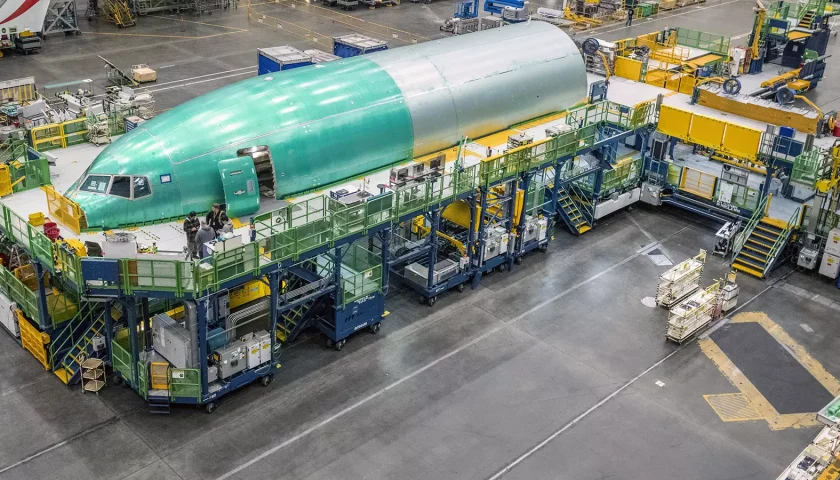
USA – Boeing has completed wing-body join for its first 777-8 freighter at its Everett facility, marking a critical production milestone for an aircraft designed to reshape long-haul cargo economics.
For fresh produce exporters across the Middle East and Africa, the development signals future opportunities to move perishable goods more efficiently across continents.
Efficiency Gains Target Perishable Supply Chains
The 777-8 freighter combines a 235-foot (72-metre) composite wing with GE9X engines to deliver a 30% reduction in fuel consumption and emissions alongside 25% lower operating costs per tonne compared to legacy freighters.
In addition, a 60% smaller noise footprint adds operational flexibility at urban-adjacent airports serving fresh produce hubs.
“This is going to be an airplane that will help customers be successful in their businesses,” said Jens Biemann, design engineer lead, noting the aircraft builds on the legacy 777 freighter platform.
For Middle Eastern food exporters, lower per-tonne operating costs translate directly to improved margins on airfreighted avocados, berries, and premium meat products destined for European and Asian markets.
Further, the aircraft’s payload and range capabilities match those of the 747-400 freighter, allowing carriers to consolidate perishable volumes on long-haul sectors without sacrificing efficiency.
African Logistics: Ethiopian Airlines Takes Lead
Ethiopian Airlines, one of seven carriers with firm orders, is positioned to leverage the 777-8 freighter to strengthen Addis Ababa’s role as a perishable logistics hub. The carrier’s existing cold-chain infrastructure at Bole International Airport already handles significant volumes of flowers, fruits, and vegetables.
With 68 orders secured including 34 firm orders plus 16 options from launch customer Qatar Airways, the programme reflects strong market confidence. Production officially commenced in July 2025 with wing spar fabrication, and the first aircraft is targeted for entry into service in 2028.
Outlook: Strategic Resilience for Food Trade
Jason Clark, vice president and general manager of the 777/777X programme, told his team: “Nobody gets to build these beautiful airplanes but us. You should all be proud of what you’re doing here today because you’re bringing that next generation of airplane to life.”
For investors and logistics leaders across the Middle East and Africa, the 777-8 freighter represents a pivotal shift toward sustainable, cost-efficient airfreight capacity.
As Ethiopian Airlines and Qatar Airways integrate these aircraft, perishable supply chains will gain the resilience needed to navigate growing global demand for high-value fresh produce.
Sign up HERE to receive our email newsletters with the latest news and insights from Africa and around the world, and follow us on our WhatsApp channel for updates.