EU blue economy push, port investments target Africa fresh produce logistics
For exporters of perishable crops, Durban’s efficiency directly impacts market access.

SOUTH AFRICA – The European Union has committed €170 million (US$184 million) to African maritime infrastructure under its Global Gateway Strategy, with the Port of Durban serving as a primary beneficiary.
For South Africa’s fresh produce sector, which exports over 2.6 million tonnes of citrus annually alongside rapidly growing avocado and stone fruit volumes, the investment signals potential relief from chronic congestion that has long disrupted cold chain integrity.
Port of Durban: A Critical Fresh Fruit Gateway
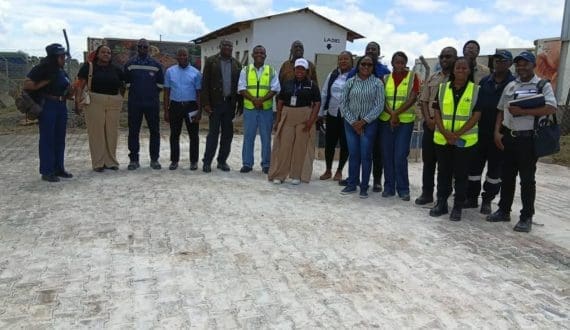
Charlina Vitcheva, Director General of the European Commission’s Maritime Affairs and Fisheries, confirmed during the Ocean Innovation Africa Summit that she would assess EU-funded expansion programmes at Durban this week.
The funding follows EU-backed loans to Transnet, South Africa’s state-owned port operator, structured with concessional terms aimed at accelerating infrastructure upgrades.
While at the Summit Vitcheva said, “We know very little about the ocean. There is so much to explore, closing that knowledge gap is key to unlocking the blue economy’s full promise.”
For exporters of perishable crops, Durban’s efficiency directly impacts market access. Congestion at the port has historically resulted in reefer containers facing temperature fluctuations, vessels missing optimal European market arrival windows, and peak-season containers stranded during critical shipping slots.
Cold Chain Implications: From Berth to Shelf
EU investments target the physical assets that underpin reliable cold chains. Expanded reefer plug availability, improved pre-cooling facilities, and reduced vessel turnaround times at Durban will lower demurrage costs and enable more predictable scheduling. These improvements are particularly significant for avocados and table grapes, where shelf life is measured in days rather than weeks.
A complementary initiative, OceanEye, backed by €50 million (US$54 million) from Horizon Europe, aims to strengthen ocean observation and digital twin technology. For logistics managers, this translates to better voyage planning and reduced uncertainty around weather-related delays enhancing the ability to maintain cold chain integrity across longer routes.
Middle East Connection and Regional Outlook
While the EU remains South Africa’s largest fresh produce market, Middle Eastern destinations including the UAE and Saudi Arabia are growing rapidly. The EU’s model of continent-to-continent institutional dialogues could serve as a template for similar Gulf Cooperation Council partnerships that further open trade corridors.
EU Ambassador Sandra Kramer noted that the loans to Transnet were provided with “very concessional conditions,” emphasizing the bloc’s commitment to sustainable infrastructure development on the continent.
Sign up HERE to receive our email newsletters with the latest news and insights from Africa and around the world, and follow us on our WhatsApp channel for updates.