

Côte d’Ivoire extends CCAK mandate to regulate mango sector
Both parties agreed on an action plan to strengthen production protection and ensure export continuity, though they did not specify details.
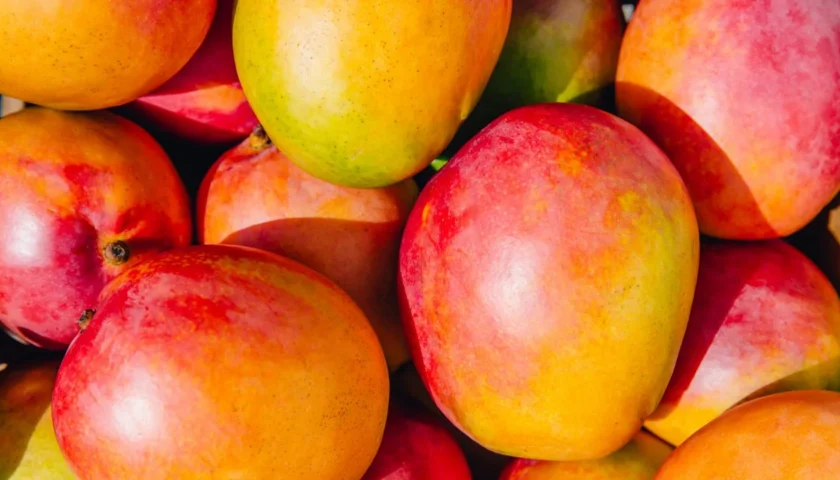
CÔTE D’IVOIRE – The Ivorian government has expanded the mandate of the Cotton, Cashew, and Shea Council (CCAK) to regulate, monitor, and develop the mango sector, the government said at a cabinet meeting on Wednesday, September 23.
“This order extends the scope of Law No. 2013-656 of September 13, 2013, which sets out the rules relating to the marketing of cotton and cashew nuts and the regulation of the activities of the cotton and cashew nut sectors, to the activities of the mango sector,” authorities announced.
“Consequently, the missions of regulation, monitoring and development of the activities of the mango sector are also entrusted to the Cotton-Cashew Council.”
Before this reform, the Ministry of Agriculture held discussions with stakeholders. On July 9, Agriculture Minister Bruno Nabagné Koné met with Vincent Omer-Decugis, president of the Ivorian Import and Marketing Company (SIIM), a major operator in the sector.
The discussions focused on protecting the mango sector and maintaining access to international markets amid the persistent threat of the fruit fly. Both parties agreed on an action plan to strengthen production protection and ensure export continuity, though they did not specify details.
Côte d’Ivoire’s mango sector remains heavily focused on exporting fresh fruit and has consolidated significantly in this segment over the past decade. Data compiled by the Directorate General of Customs show that mango exports more than doubled, rising from 27,600 tonnes in 2015 to 64,100 tonnes in 2024.
Meanwhile, export revenues increased from 8.9 billion CFA francs (US$15.4 million) in 2015 to 26 billion CFA francs (US$45 million) in 2024.
However, these export figures do not reflect the full potential of Ivorian production. In 2024, of a harvest estimated at 198,700 tons by the Ministry of Agriculture, only about 32% was exported, leaving a significant share for the domestic market or other outlets.
As a result, adding value is especially important because post-harvest losses can reach up to 40% of national mango production each year, according to data cited by the Agricultural Sector Development Support Program (PADFA).
Furthermore, in December 2024, PADFA announced it was seeking 14 billion CFA francs (US$24 million) from the private sector to finance an agro-industrial unit for mango processing in northern Ivory Coast.
Finally, by extending the CCAK’s responsibilities to mangoes, the government is strengthening the institutional framework of a sector poised to better structure its value chain.
Sign up HERE to receive our email newsletters with the latest news and insights from Africa and around the world, and follow us on our WhatsApp channel for updates.