Ecuador’s banana surplus pushes prices down as trade dispute with Colombia adds pressure
The probability of an El Niño event has risen to 67%, prompting growers to reinforce drainage systems and prepare their fields.
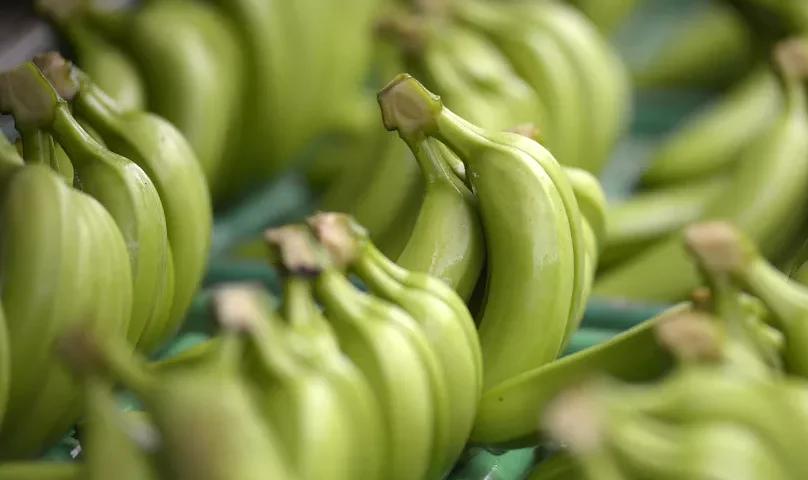
ECUADOR – Ecuador’s banana production has exceeded expectations in 2026, pushing prices to their lowest levels in years. The diplomatic dispute between Ecuador and Colombia has worsened the situation, with both countries imposing tariffs that have redirected Colombian-bound fruit to the local market.
The key economic and diplomatic factors driving current price fluctuations include abundant seasonal supply peaking in the first four months of the year, the Ecuador-Colombia trade conflict creating additional local volume, and historically low reference FOB prices.
“By comparison, in a normal high season, the reference FOB price in October tends to hover around US$18. Last year, however, it reached levels close to US$24,” said Camilo J. Gómez from Ecuadorian exporter Cimexport. “The fruit that was going to Colombia is now staying here,” he added.
On the other hand, climate change and disease threats are shaping production strategies by increasing preparation for environmental risks. The probability of an El Niño event has risen to 67%, prompting growers to reinforce drainage systems and prepare their fields.
In addition, bacterial wilt (Ralstonia solanacearum) remains an issue, although progress has been made in controlling it following quarantine measures on several farms. Many companies have begun modernizing their fields, with growers maintaining rigorous field management to ensure fruit quality on arrival.
The sector is diversifying through value-added products, including chips, tostones, baskets, and frozen plantain ready for home use. These products have been gaining shelf space in supermarkets across Europe and the United States.
Consequently, processed plantain snacks offer an outlet for surplus production and capture higher margins than fresh fruit.
On the logistics front, the export sector reports disruptions on transit routes to Europe, with container delays and a shortage of shipping space. Although freight rates have not risen sharply, Gómez warns that they may be revised.
The trade conflict with Colombia, a neighbouring market, has effectively closed a natural outlet for excess fruit, suppressing prices across all markets.
The 67% El Niño probability also signals potential supply shocks ahead, which could reverse current low prices if growing conditions deteriorate. As a result, importers may want to secure forward contracts now while prices remain depressed, hedging against weather-driven scarcity later in the season.
Sign up HERE to receive our email newsletters with the latest news and insights from Africa and around the world, and follow us on our WhatsApp channel for updates.