
South Africa’s citrus gains expanded China market access through a new phytosanitary deal
The logistical challenges mentioned in the agreement include ongoing port and logistics inefficiencies that affect export efficiency.
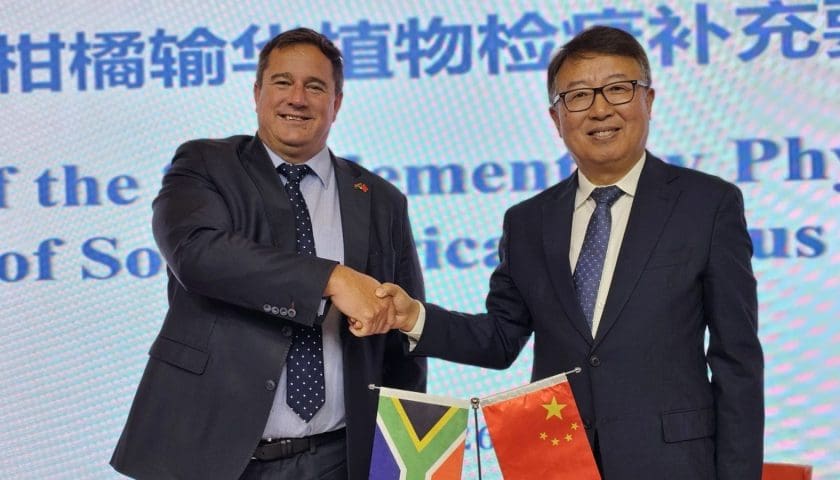
SOUTH AFRICA – Western Cape Minister of Agriculture, Economic Development and Tourism, Dr Ivan Meyer, has welcomed the supplementary citrus phytosanitary agreement between South Africa and China, formalized on 10 April 2026, saying it will ease export requirements and strengthen market access for Western Cape citrus producers.
The primary economic benefits for South African citrus producers include reduced trade barriers, expanded access to China’s 1.4 billion consumers, reduced volatility stemming from geopolitical tensions in traditional markets, and support for job creation across the agricultural value chain.
“This agreement is a significant breakthrough for economic growth and job creation in the Western Cape. By removing trade barriers and expanding access to the Chinese market, we are creating new opportunities across the agricultural value chain, from farm workers to exporters, while strengthening the competitiveness of our citrus industry,” said Minister Meyer.
Approximately 20% of South Africa’s citrus production is in the Western Cape. However, South Africa’s counter-seasonal advantage impacts its trade with China by allowing citrus exporters to supply the Chinese market when Northern Hemisphere production is low. This timing creates a natural window of opportunity for South African fruit to enter China without direct competition from European or North American suppliers.
“This counter-seasonal advantage not only boosts export potential but also supports stable production cycles that are critical for job retention in the sector,” Meyer said. Consequently, the agreement enables Western Cape producers to capture premium pricing during off-season months.
The logistical challenges mentioned in the agreement include ongoing port and logistics inefficiencies that affect export efficiency. However, Meyer stated the provincial government would continue working with stakeholders to improve export performance.
Support measures mentioned include participation in trade shows and export exhibitions in China, facilitation of business-to-business engagements with international buyers, provision of extension and advisory services to assist with export compliance, and collaboration with industry stakeholders to strengthen competitiveness.
“Our focus is on ensuring that producers are well-positioned to expand exports, grow their businesses, and in turn sustain and create more jobs in rural communities,” said the Minister.
Finally, successful execution could position South Africa as a year-round citrus supplier to China, not just a seasonal filler. The provincial government’s active role in trade missions and compliance support offers a replicable model for other African exporting nations seeking to diversify away from traditional European buyers.
Sign up HERE to receive our email newsletters with the latest news and insights from Africa and around the world, and follow us on our WhatsApp channel for updates.