

Niger supplies 68% of West Africa’s onions as informal trade stabilizes prices
If Niger’s harvest fails or export policies shift, multiple importing countries would face simultaneous supply shocks.
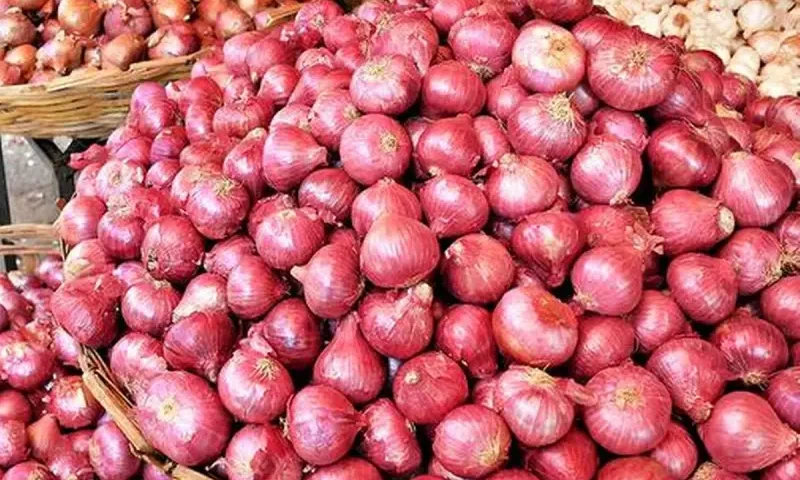
WEST AFRICA – Approximately 69% of intra-regional onion trade in West Africa takes place through informal channels, making onions the leading horticultural product in regional commerce despite significant data limitations.
A 2025 report by the Sahel and West Africa Club of the OECD highlights that informal networks both stabilize and threaten food security across the sub-region.
Niger emerges as the dominant supplier, accounting for roughly 68% of regional exports. The country’s annual harvest is estimated at nearly 2 million metric tons, supporting sustained self-sufficiency.
On the import side, Ghana is the primary destination, with onion shipments from Niger alone equivalent to half of Ghana’s domestic production. Benin, Burkina Faso, and Nigeria are among the other major exporters.
Informal trade networks are crucial to regional food price stability. The onion trade follows pronounced seasonal patterns, intensifying during the Niger harvest season to supply urban markets in deficit countries. When production is lower, trade shifts to alternative sources.
As a result, this dynamic helps stabilize supply and prices across urban markets, offsetting spatial and temporal production imbalances. Ghana, Benin, and Togo source their onions primarily from Niger, accounting for roughly three-quarters, two-thirds, and half of their onion imports, respectively.
However, recent trade disputes between Nigeria and Ghana have highlighted the vulnerability of these supply chains. Although the dispute has since been resolved, the episode demonstrated that informal networks, despite their stabilizing function, remain fragile.
Niger’s near monopoly as the dominant supplier, accounting for 68% of regional exports, creates concentration risk. If Niger’s harvest fails or export policies shift, multiple importing countries would face simultaneous supply shocks.
On the other hand, Ghana, Benin, and Togo’s heavy reliance on Niger leaves them exposed. Senegal presents a different pattern: it is the leading West African importer, accounting for 27% of total regional imports, yet three-quarters of its onions come from the Netherlands rather than regional sources. This diversification insulates Senegal from West African supply disruptions but at a higher cost.
Trade disputes threaten the broader equilibrium of regional supply chains and expose the vulnerability of a system reliant on informal flows. Therefore, understanding seasonal patterns and maintaining diversified sourcing options are essential to managing price volatility.
As regional integration deepens, formalizing trade channels while preserving the flexibility of informal networks remains a critical challenge for policymakers and investors alike.
Sign up HERE to receive our email newsletters with the latest news and insights from Africa and around the world, and follow us on our WhatsApp channel for updates.

