Ghana cocoa farmers reject new COCOBOD law
Farmers’ representatives say Ghana’s new cocoa legislation fails to address structural weaknesses and could prolong the country’s dependence on raw bean exports.
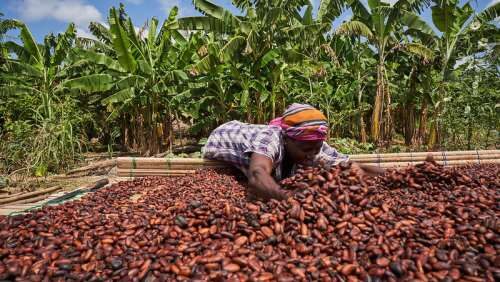
GHANA – The Ghana National Cocoa Farmers Association has criticised the newly enacted Ghana Cocoa Board Law, 2026, describing it as an outdated framework that could hinder the development of the country’s cocoa industry.
Nana Aduna II, a spokesperson for the association, said the legislation maintains the COCOBOD-centred model introduced during British colonial rule and continues to leave Ghana largely focused on producing and exporting raw cocoa beans.
“This bill, unfortunately, rather entrenches an outdated view that sabotages the development of our cocoa economy,” he said in an interview with JoyFM.
“It maintains an outdated colonial model, which is the COCOBOD model that was introduced by the British,” he added.
Nana Aduna II said Ghana would not realise the full economic value of its cocoa sector without structural reforms that prioritise local processing and the production of finished cocoa products.
“We are not going to go too far unless we actually look at how we can improve the value of our cocoa sector,” he said.
He described the system as “an outdated model based on an outdated British system”, arguing that it continues to limit Ghana primarily to cocoa bean production for export.
President John Mahama assented to the Ghana Cocoa Board Bill, 2026, on August 26. The legislation repeals the Ghana Cocoa Board Act, 1984 (PNDCL 81), and establishes a new statutory framework for regulating the cocoa sector.
The new law guarantees cocoa farmers at least 70% of the gross Free-on-Board price and requires a minimum of 50% of Ghana’s cocoa beans to be processed locally.
Before the bill received presidential assent, the Minority in Parliament criticised the legislation and called for broader consultations with farmers and other cocoa industry stakeholders.
Former Deputy Minister for Food and Agriculture in charge of Cocoa Affairs, Yaw Frimpong Addo, said the Minority was not opposed to the entire bill but believed some provisions could adversely affect cocoa farmers.
He also questioned its passage under a certificate of urgency, saying Parliament’s Agriculture Committee and key industry players, including cocoa hauliers, were not adequately involved in the process.
The debate comes as Ghana’s cocoa industry faces another difficult season. Cocoa production is forecast to decline by at least 16% in the 2026/27 crop year.
The Ghana Cocoa Board (COCOBOD) has attributed part of the expected decline to weather conditions, highlighting concerns over production in one of the country’s key agricultural industries.
Sign up HERE to receive our email newsletters with the latest news and insights from Africa and around the world, and follow us on our WhatsApp channel for updates.