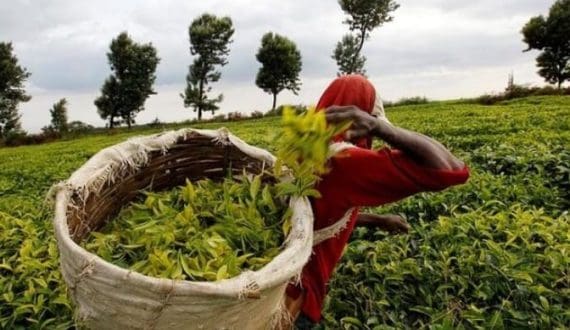
Kenya tea industry seeks regulatory reset as 2021 pricing rule linked to auction glut, rising compliance costs
Tea growers press lawmakers to streamline overlapping regulations and revise minimum auction pricing as county levies and bureaucracy dampen investment and farmer returns.

KENYA – Kenya’s tea value chain is facing renewed calls for legal and policy reforms, with growers and processors identifying regulatory duplication and state-directed pricing as major constraints to sector competitiveness and farmer earnings.
The Kenya Tea Growers’ Association (KTGA) formally asked Parliament to reassess the current regulatory design, saying the framework has not kept pace with shifting global market conditions and escalating production expenses.
KTGA Chief Executive Officer Lindah Oluoch said compliance obligations enforced by multiple agencies have raised costs and slowed investment in higher-margin processing initiatives.
Oluoch told the National Assembly’s Agriculture and Livestock Committee that regulatory functions shared across institutions including the Kenya Bureau of Standards, the National Environment Management Authority, the Kenya Revenue Authority and the Tea Board of Kenya have created cost-heavy overlaps and delayed approvals for value-enhancement projects.
The committee, led by Tigania West Member of Parliament (MP) John Mutunga, is carrying out an inquiry into the persistent decline in auction payments made to tea-growing communities.
Mutunga said the panel will hold sessions with officials from the Ministry of Agriculture, the Tea Board of Kenya, the Kenya Tea Development Agency (KTDA), brokers and export marketers to assess the factors influencing the contraction in payments.
KTGA said the absence of a harmonised and efficient oversight structure has led to unpredictable pricing conditions, reduced investor appetite and weaker competitiveness in export markets.
In addition to oversight complexity, KTGA linked depressed auction prices to a minimum pricing rule issued by the Ministry of Agriculture in July 2021. The directive had introduced a base auction price for tea supplied by smallholder factories, an intervention initially intended to curb price erosion during periods of market weakness.
Oluoch said the pricing measure did not generate the intended demand-side response. Instead, the rule contributed to excess tea volumes accumulating at the national auction, triggering what the association described as the sharpest fall in historical auction prices, influenced by an oversupply in tradable lots.
KTGA also petitioned for the creation of a single regulatory clearance channel to process and validate compliance for tea-processing enterprises, supported by rationalised fees and approval timelines.
The association further recommended shifting oversight to risk-weighted models that reduce unnecessary checks on compliant processing plants.
The association additionally raised concerns over variations in county-administered levies, saying a number of tea-producing counties maintain higher land-based charges, agricultural cess rates and large-scale producer levies that have discouraged investment and reduced confidence among major processors and export aggregators.
Oluoch asked for a joint harmonisation structure for these county charges through the Council of Governors, the National Treasury and registered producer organisations.
KTGA said county charges should be matched clearly to service delivery and business-enablement investments rather than being applied predominantly for revenue expansion goals.
KTGA concluded that clearer pricing governance, simplified oversight and predictable county fee structures would help stabilise export competitiveness for Kenyan tea, support input access for growers and strengthen incentives for private-sector investment in value-enhancing processing.
Sign up HERE to receive our email newsletters with the latest news and insights from Africa and around the world, and follow us on our WhatsApp channel for updates.