

Uganda launches fertiliser relief fund for tea farmers in Kanungu district
Uganda backs tea growers with subsidised fertiliser financing while grid expansion restores factory production delayed by costly generator operations.
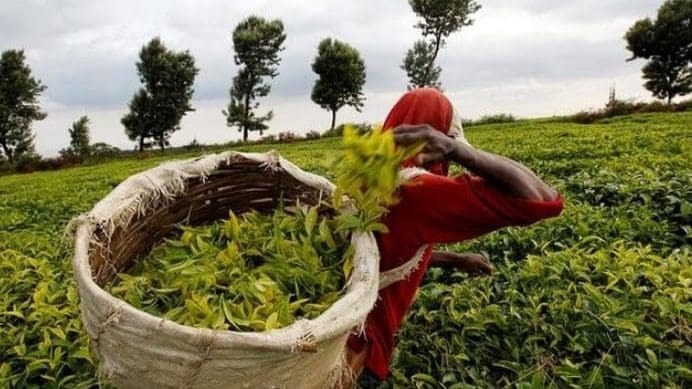
UGANDA – Uganda’s President Yoweri Museveni has unveiled a government-backed support plan for tea farmers in Kanungu District, anchored on a newly created special fertiliser fund.
The facility will allow growers to obtain fertilisers at lower and more predictable costs, addressing concerns raised by estate managers and producer groups in Kanungu’s tea-growing belt.
Museveni said fertiliser price inflation had become a major threat to productivity in the district, where tea remains a cornerstone of household and industrial economic activity.
The intervention, he confirmed, will be delivered through Savings and Credit Cooperative Organisations (SACCOs), applying a disbursement structure comparable to programs being readied for sugarcane farmers and fishing communities.
The President also urged small-scale farmers to maintain momentum on the national four-acre agricultural model.
The land-use strategy encourages structured zoning of available farm acreage into four specific enterprises—coffee, fruits, staple food crops, and pasture for livestock—enabling multi-income diversification for households with smaller land parcels.
Consecutively, progress on rural power infrastructure was also confirmed in Kanungu following the completion of an UGX 884 million (US$243.83K) rural grid expansion project.
Mpungu Tea Factory Electrification
The electrification scheme has re-energised Mpungu Tea Factory in Kinyambeho, Mpungu sub-county, restoring production that had stalled for two years after the factory’s 2023 commissioning.
Energy Minister Ruth Nankabirwa said electricity delivery had been prioritised after it emerged that the facility had relied on diesel generator operations following the launch, before shutting down due to unsustainable costs.
“As the ministry, we recognised that loss of grid power would freeze investment, postpone jobs and defer commercial returns,” Nankabirwa said.
She added that the Ministry of Energy and Mineral Development remains committed to stabilising power access for agro-industrial factories, enabling agricultural value addition for farmers, expanding low-cost energy for households, and meeting Uganda’s middle-income advancement road map.
Mpungu Tea Factory is a subsidiary of Kayonza Growers Tea Factory Limited, a farmer-owned tea processor in Kanungu with more than 8,000 smallholder shareholders.
The factory was launched on July 8, 2023, with expectations to generate 220 direct jobs and increase household earnings for tea-growing communities, plans disrupted at inception by delayed electrical connectivity.
The full electrification program for the factory and related networks is projected to cost UGX 20.8 billion (US$5.7M) upon completion.
The financing structure comprises a long-term credit facility of US$4.5M from Oiko Credit, a Dutch-headquartered social investment lender, and US$1.2M co-financing from Kayonza Growers Tea Factory Limited.
Sign up HERE to receive our email newsletters with the latest news and insights from Africa and around the world, and follow us on our WhatsApp channel for updates.