
Maersk raises port charges in South Africa following Transnet fuel neutrality policy
These logistical changes ensure the carrier’s rate structure remains aligned with local terminal requirements and regulatory standards.
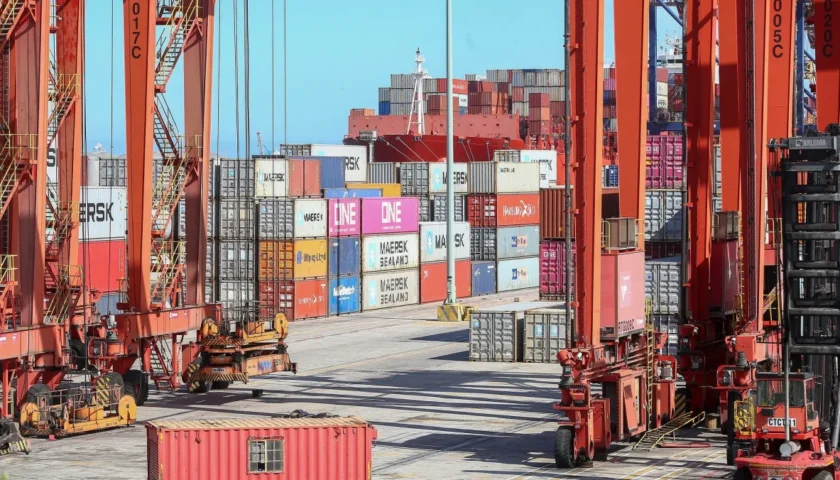
SOUTH AFRICA – A.P. Moller-Maersk has announced revisions to its Port Additional / Port Dues Export (PAE) and Port Additional / Port Dues Import (PAI) charges for South Africa, following Transnet Port Terminals’ (TPT) terminal announcement on 1 July 2026, as the shipping line aligns its rate structure with local terminal requirements and regulatory standards.
The revised charges apply to all containers discharged from 1 August 2026, with the Price Calculation Date (PCD) set at 1 August 2026.
From August 2026, A.P. Moller-Maersk will implement updated pricing for import and export port fees across its South African operations. This adjustment follows Transnet Port Terminals’ recent announcement of a Fuel Neutrality policy.
Additionally, both inbound and outbound container charges are scheduled to rise to 78 South African Rand per unit.
Price Calculation and Booking Structures
For non-SPOT bookings, rates are retrieved using PCD, which is the scheduled departure date of the first water leg at booking confirmation for non-FMC trades, or the last container gate-in date for FMC-regulated trades.
The shipping line has clarified that the dates used to calculate prices will vary depending on whether a customer uses SPOT bookings or standard agreements. These logistical changes ensure the carrier’s rate structure remains aligned with local terminal requirements and regulatory standards.
Market Context and Cost Implications
The Fuel Neutrality Implementation advisory from TPT marks a significant shift in how terminal operators structure their pricing. By introducing this policy, Transnet aims to address fuel cost volatility and ensure terminal operations remain financially sustainable amid fluctuating energy prices.
The ZAR 78 (US$4.74) per-container fee represents a 50% increase on the previous ZAR 52 (US$3.16) charge, marking a substantial adjustment that will affect shipping budgets for importers and exporters in the region.
Outlook and Industry Impact
The rate revision highlights the broader trend of rising operational costs across the maritime logistics sector.
Moreover, as terminal operators face higher fuel costs and regulatory compliance requirements, shipping lines are compelled to adjust their fee structures to maintain service levels and operational viability.
Ultimately, the update informs global traders of the rising costs of moving cargo through South African ports, and the shipping line remains prepared to review its pricing structure as market conditions evolve to sustain long-term service delivery in the region.
Sign up HERE to receive our email newsletters with the latest news and insights from Africa and around the world, and follow us on our WhatsApp channel for updates