Maple Leaf Foods targets U.S. expansion in 2026 growth strategy
U.S. seen as long-term strategic market rather than short-term sales outlet

CANADA – Maple Leaf Foods has outlined plans to make the United States a core pillar of its 2026 growth strategy, signaling a shift toward deeper engagement with the world’s largest protein market as the Canadian company looks beyond its domestic base for future expansion.
In its forward-looking outlook, the Mississauga, Ontario-based processor said rising global demand for protein and changing consumer consumption patterns are creating space for cross-border growth, with management indicating that the U.S. will move from being a secondary market to a central focus in its North American business planning.
U.S. market positioning
Company executives have framed the U.S. not as a short-term volume opportunity but as a platform for building durable growth, pointing to the scale, competitive structure, and diversity of American consumer demand as factors that support long-term investment in brand development, product innovation, and operational infrastructure.
To support this strategy, Maple Leaf is maintaining a controlled capital spending approach that prioritizes productivity gains, efficiency improvements, and brand investment, with the aim of strengthening its competitive position in both Canada and the United States while protecting margins in a sector defined by tight pricing and intense competition.
Brand growth and product expansion
Brand-led development remains a central part of the company’s strategy, reflected in its recent launch of Mighty Protein, a chicken-based protein stick product designed as a portable snack option offering 12 grams of protein per stick with no sugar, fillers, or artificial ingredients, targeting health-focused consumers seeking high-protein convenience foods.
The Mighty Protein range, produced from lean chicken and marketed as gluten-free and keto-friendly, is available in Original, Buffalo, and BBQ flavors, sold individually in 32-gram sticks and in eight-pack formats across Canadian retail outlets, highlighting Maple Leaf’s continued push into value-added and branded protein categories.
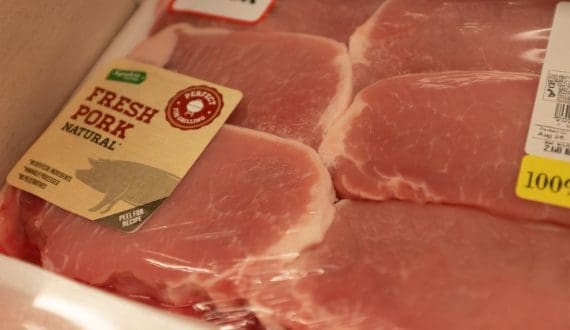
The expansion push comes as the company reported higher third-quarter revenue and earnings, supported by stronger pork pricing, improved operational performance, and steady demand across its main business units, with the pork segment playing a significant role in overall financial results.
Maple Leaf attributed pork growth to heavier hog weights, favorable market conditions, and improved on-farm management practices in areas such as animal health, nutrition, and genetics, while industry analysts have linked the performance to broader stabilization within the Canadian pork sector following years of trade disruptions, disease pressures, and volatile input costs.
Alongside its branded product growth, the company is in the final phase of separating its pork operations into a standalone entity, a restructuring move expected to reshape relationships between processors and producers and create new participation opportunities for farms that meet efficiency, biosecurity, and data-driven performance standards tied to premium supply and export-focused programs.
Sign up HERE to receive our email newsletters with the latest news and insights from Africa and around the world, and follow us on our WhatsApp channel for updates.