Middle East solar vegetable dryer market to hit US$180M by 2034
Users can now track temperature, humidity, and drying progress via mobile applications, enabling remote management and predictive maintenance.
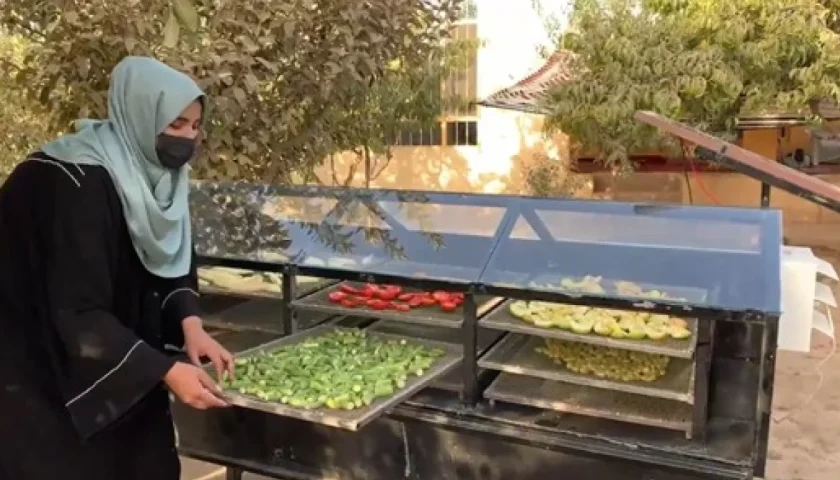
UAE – The Middle East solar vegetable dryer market is poised for significant expansion, with projections reaching US$180.2 million by 2034 at a compound annual growth rate of 9.8%.
For fresh produce investors and food logistics professionals, this growth signals new opportunities to reduce post-harvest losses and extend shelf life for regional vegetable production.
Why Solar Drying Matters for Food Logistics
Post-harvest losses across the Middle East remain substantial due to inadequate storage and processing facilities.
Therefore, solar vegetable dryers offer a sustainable, low-cost alternative to fossil-fuel-dependent methods, directly addressing food security concerns.
Furthermore, the region’s abundant solar irradiance makes these systems technically feasible and economically viable for preserving tomatoes, peppers, herbs, and other vegetables.
Saudi Arabia currently dominates the market share, while the UAE leads as the fastest-growing region, with a 10.5% CAGR, driven by heavy investment in agricultural innovation and supportive government policies.
Product Trends: Cabinet and Multi-Layer Dryers Lead
To begin with, cabinet dryers represent the leading product type. They are popular among small-scale farmers and food processors for their compact design and ease of use.
On the other hand, multi-layer dryers are experiencing the fastest growth, reflecting a shift toward more efficient and scalable solutions for commercial food production.
However, there is a significant trend in the development of hybrid solar-dryer systems that incorporate backup electrical or biomass heating elements.
These systems address solar intermittency, ensuring consistent drying performance regardless of daylight availability, a critical feature for commercial applications requiring continuous processing.
Smart Technology and Investment Opportunities
Manufacturers are increasingly integrating IoT capabilities and smart monitoring features into solar dryers. Users can now track temperature, humidity, and drying progress via mobile applications, enabling remote management and predictive maintenance. This digital integration aligns with broader precision agriculture adoption across the region.
For investors, opportunities exist in developing models specifically designed for Middle Eastern conditions, including enhanced UV resistance and dust protection.
In addition, strategic partnerships with agricultural ministries and food processing companies can accelerate adoption through pilot projects and training programs.
Government Support and Market Outlook
Government subsidies, tax incentives for Agri-tech investment, and national food security strategies are accelerating market adoption.
For instance, initiatives such as Saudi Vision 2030 and the UAE’s food security frameworks prioritize technologies that reduce waste and improve self-sufficiency.
As hybrid systems and smart monitoring become standard, solar vegetable dryers will play an increasingly vital role in the region’s fresh produce supply chain.
Sign up HERE to receive our email newsletters with the latest news and insights from Africa and around the world, and follow us on our WhatsApp channel for updates.