

China approves major revisions to its fisheries law
China’s updated fisheries legislation introduces stricter rules on illegal fishing and aquaculture practices. The law comes into effect on May 1.
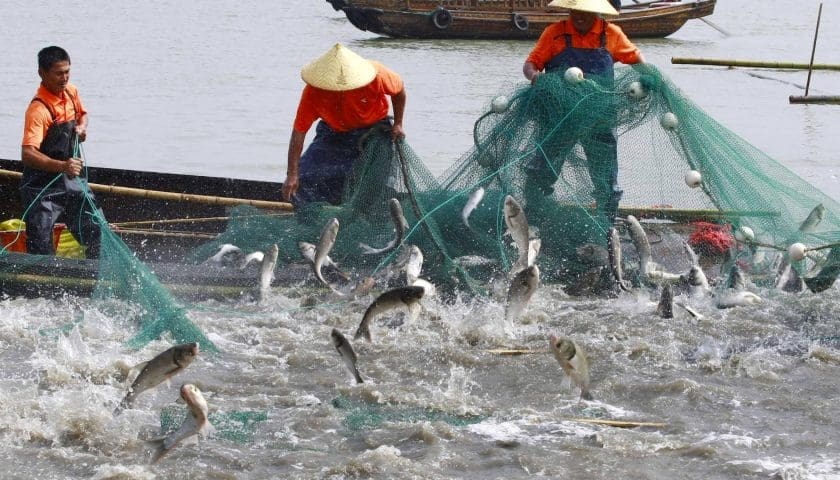
CHINA – China’s National People’s Congress has passed a revised fisheries law that significantly changes the framework of the country’s current regulations.
The legislation includes measures to reduce illegal, unreported, and unregulated (IUU) fishing, in line with the Port State Measures Agreement, which China ratified in early 2025.
Under Articles 55 to 59, foreign vessels are restricted to specific Chinese ports, and any ship involved in IUU activities is barred from entering national harbours.
The revision also introduces tighter rules for aquaculture operations, aiming to reduce pollution and other environmental damage associated with fish farming.
Article 15 of the law encourages the development of ecologically responsible aquaculture in oceans, rivers, lakes, reservoirs, and other water bodies, including deep-sea and international cooperative projects.
Article 28 sets environmental responsibilities for aquaculture operators, requiring them to manage feeding and drug use carefully, determine appropriate stocking densities, and ensure wastewater does not exceed pollutant discharge limits or harm ecosystems.
Industry observers suggest that companies with structured, environmentally conscious operations could benefit from the new rules.
A report by the Fengkou financial news outlet highlighted that the law aims to shift aquaculture from resource-heavy, nearshore methods to controlled, offshore practices that reduce ecological strain.
The Guoxin Development Group, for example, operates shipborne aquaculture in waters 50 to 100 nautical miles offshore, which the report describes as having a lower environmental impact than traditional nearshore operations.
According to the report, the law’s objectives align with industrial-scale operations that focus on intensive management, standardisation, and the integration of land and sea facilities.
Analysts say the changes may reshape China’s fisheries sector by promoting stricter environmental compliance and reducing reliance on extensive coastal farming practices.
The revised law also signals the government’s effort to integrate international obligations with domestic aquaculture policies, particularly regarding sustainability and pollution control.
Experts note that enforcement of the new provisions, including port restrictions for foreign vessels and aquaculture standards, will be critical in determining the law’s overall effectiveness.
China’s updated fisheries law represents a comprehensive approach to regulating both domestic aquaculture and foreign fishing activities while addressing ecological and international trade concerns.
The law will officially take effect on May 1, and stakeholders across the sector are expected to adjust operations to meet the new legal and environmental requirements.
The implementation is likely to influence both nearshore and offshore aquaculture patterns, affecting production methods and environmental management strategies nationwide.
Sign up HERE to receive our email newsletters with the latest news and insights from Africa and around the world, and follow us on our WhatsApp channel for updates.