

Chocolate giants Mars, Nestlé, Mondelez linked to Liberia deforestation via mass-balance cocoa supply chains – Global Witness
Satellite evidence shows cocoa from freshly cleared Liberian rainforests entering certified “sustainable” supply chains of world’s biggest chocolate makers.
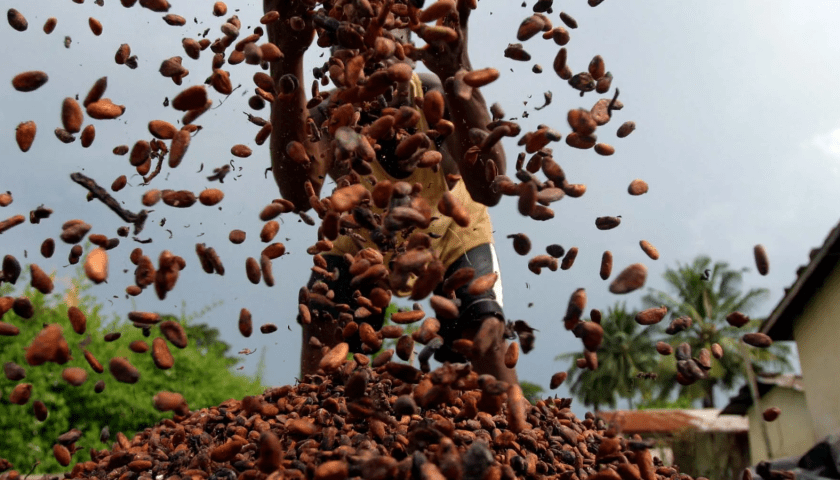
LIBERIA – Environmental campaign group Global Witness has accused five of the world’s largest chocolate manufacturers of being indirectly connected to widespread deforestation in Liberia through certified cocoa supply chains.
The investigation names Mars, Nestlé, Mondelez International, Hershey, and Unilever as companies whose cocoa purchases may include beans produced on land cleared from protected rainforest areas.
The NGO stresses that none of the manufacturers source cocoa directly from Liberia, but claims an untraceable network of traders mixes Liberian beans with certified supplies under the Rainforest Alliance’s mass-balance system.
Using satellite imagery, customs records, and field interviews, researchers tracked cocoa originating from deforested zones in Liberia’s Bong, Nimba, and Lofa counties to international commodity traders Cargill and Olam, which then supply the major chocolate brands.
Between 2021 and 2024, these three counties lost approximately 250,000 hectares of tree cover, an area larger than Luxembourg, largely driven by surging global cocoa prices that encouraged rapid plantation expansion.
The report highlights how the mass-balance approach allows physically mixed beans from sustainable and non-sustainable farms to be sold under the same certification label. Global Witness argues this practice enables chocolate carrying Rainforest Alliance certification to contain cocoa linked to recent forest destruction.
In response, the Rainforest Alliance defended the mass-balance model, stating that segregated sourcing, while preferable, remains impractical for many smallholder farmers. Without mass balance, the organisation said, thousands of certified producers would lose market access and investment in conservation programmes.
The upcoming EU Deforestation Regulation, originally scheduled to take effect at the end of 2024, would prohibit mass-balance sourcing and mandate full traceability and geolocation for cocoa entering the European market. However, both the European Parliament and Council recently supported an additional delay to the regulation’s implementation.
Individual companies strongly rejected the allegations. Nestlé emphasised that it does not operate in or source directly from Liberia and that all directly purchased cocoa passes through its own traceability programmes.
Mars stated that neither the company nor its suppliers procure Liberian cocoa under its responsible sourcing initiative. Cargill clarified it does not purchase Liberian-origin cocoa from the traders named in the report and has no record of previous transactions with those entities. Olam indicated it would examine the findings carefully.
Liberia remains home to the largest intact portion of the Upper Guinean Tropical Rainforest, a critical habitat for endangered chimpanzees, forest elephants, and other rare species.
Environmentalists warn that continued cocoa-driven encroachment threatens irreversible biodiversity loss in one of West Africa’s last major rainforest blocks.
Sign up HERE to receive our email newsletters with the latest news and insights from Africa and around the world, and follow us on our WhatsApp channel for updates.

