Maersk expands Brazil depots in Rio Grande, Paranaguá, boosts reefer capacity
The developments incorporate energy-efficient layouts to reduce fuel consumption, along with waste-treatment and water-reuse systems.
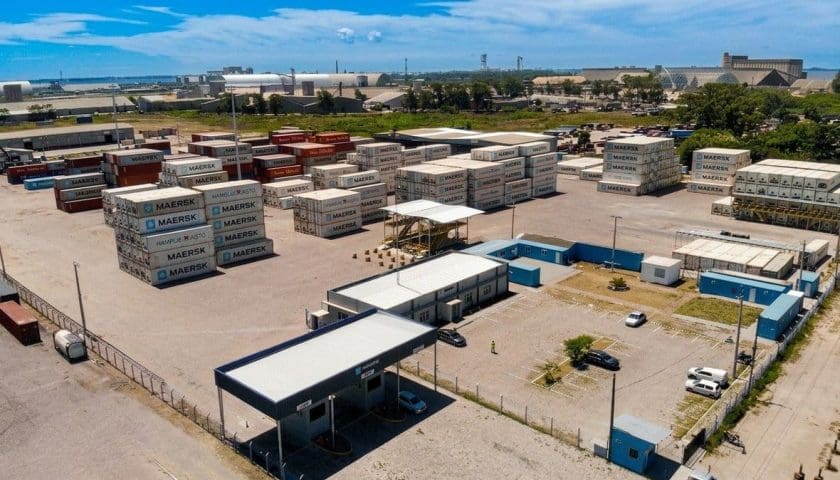
BRAZIL – Maersk has announced new investments in two strategic inland facilities in Rio Grande and Paranaguá, expanding its logistics network in Southern Brazil.
For fresh produce exporters and food logistics investors, these developments directly address the growing demand for integrated refrigerated cargo solutions, thereby reducing port congestion and improving container rotation for time-sensitive perishable shipments.
Strategic Locations and Capacity Expansion
Rio Grande and Paranaguá were selected for their location within high-volume export corridors and proximity to major production centres.
Both sites are near their respective ports and have direct road access to regional distribution hubs, enabling faster container rotation, improved inland transport efficiency, and reduced bottlenecks during seasonal peaks.
In Paranaguá, customers highlighted the need for additional space during peak periods for agricultural and refrigerated cargo. The extension addresses this need by expanding the Cargo Services area to 6,000 square metres, enabling higher throughput and more efficient truck flow.
The Rio Grande facility covers approximately 70,000 square metres and is only 2.5 kilometres from Rio Grande Port, near key industrial zones in Southern Brazil.
Direct Statement from Leadership
Ricardo Rocha, Vice President and Managing Director for East Coast South America, said: “These investments meet the needs of customers moving agribusiness, refrigerated commodities, and industrial cargo through Brazil’s main export corridors. By expanding capacity near the ports of Rio Grande and Paranaguá, we strengthen inland reliability, support peak-season demand, and create simpler end-to-end logistics solutions for the sectors driving Brazil’s trade growth.”
Sustainability and Integrated Logistics
Both locations feature optimized layouts to improve container handling and truck circulation, dedicated reefer plug capacity, and infrastructure designed for safe and efficient operations.
The developments incorporate energy-efficient layouts to reduce fuel consumption, along with waste-treatment and water-reuse systems.
The facilities will provide container inspection, cleaning, repairs, and operational support to help reduce customer lead times. Key customer segments expected to benefit include agribusiness exporters, refrigerated cargo shippers, and industrial importers seeking end-to-end logistics solutions.
Outlook for Food Trade
For food investors sourcing Brazilian poultry, beef, soy, and processed foods, increased depot capacity at key export gateways reduces dwell times, improves cold-chain integrity, and enables more predictable shipping schedules during peak harvest seasons.
Sign up HERE to receive our email newsletters with the latest news and insights from Africa and around the world, and follow us on our WhatsApp channel for updates.