Malawi transitions to digital pest surveillance under Africa Phytosanitary Programme
A key milestone of the initiative is the transition from paper-based to digital pest surveillance systems.
MALAWI – Malawi is modernizing its agricultural protection systems by moving from outdated paper records to advanced digital surveillance tools, with support from the Food and Agriculture Organization and the International Plant Protection Convention.
Plant pests pose a serious threat to food security and agricultural trade in Malawi, undermining the competitiveness of the country’s crops in regional and global markets.
Malawi’s pest problem is compounded by the growing impacts of climate change, including cyclones, erratic rainfall, floods, and droughts, which facilitate the spread of destructive pests such as the Fall Armyworm and Tomato leaf miner.
For years, phytosanitary surveillance systems in Malawi have relied largely on paper-based processes, limiting timely data collection, analysis, and response to pest outbreaks.
Therefore, to address these challenges, the Government of Malawi, with support from FAO and IPPC, has launched the Africa Phytosanitary Programme (APP), an initiative to strengthen the resilience of phytosanitary systems across the continent.
The programme, coordinated by the IPPC Secretariat, was officially launched by Mrs. Erica Maganga, Secretary for Agriculture, Irrigation and Water Development, who emphasized the need to move from policy to implementation to address pest and disease challenges.
Additionally, George Mvula, Assistant FAO Representative in Malawi, reaffirmed FAO’s commitment to supporting Malawi’s agricultural resilience. A key milestone of the initiative is the transition from paper-based to digital pest surveillance systems.
As a result, Malawi will be able to collect, analyze, and share real-time data, enabling faster detection and response to pest outbreaks, improving compliance with international plant health standards, and expanding market access for agricultural products.
Moreover, digital surveillance improves food security by enabling early detection and rapid response to pest outbreaks, preventing widespread crop damage.
For trade, enhanced surveillance builds confidence among importing countries, reducing the risk of export rejections due to pest interceptions and improving Malawi’s competitiveness in international markets.
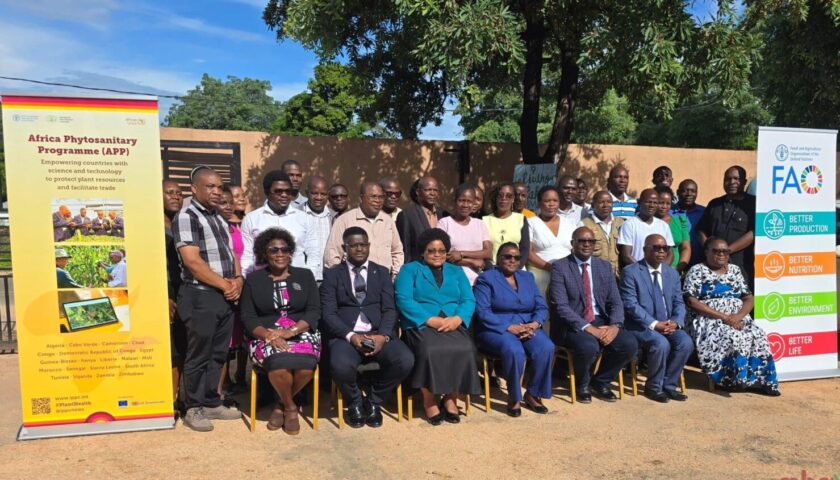
As part of the rollout, a national training workshop was held in Salima, bringing together 25 plant health inspectors and plant protection officers from border posts, aviation, crop, and research departments of the Ministry of Agriculture, as well as the private sector. Malawi is among 20 African countries currently taking part in the programme.
Lastly, through strengthened surveillance systems, enhanced technical capacity, and improved coordination, Malawi is positioning itself to better protect its crops, safeguard food security, and increase agricultural trade in an increasingly challenging climate.
Sign up HERE to receive our email newsletters with the latest news and insights from Africa and around the world, and follow us on our WhatsApp channel for updates