Zimbabwe targets Middle East market for goat meat exports
The government, through ZimTrade, plans to group smallholder farmers under export clusters as part of efforts to access new markets.
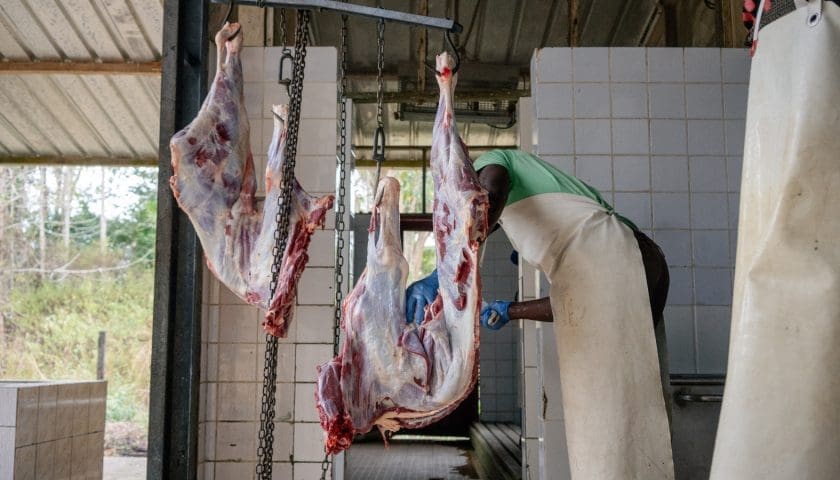
ZIMBABWE – Animal production, including livestock and poultry, contributes about 30% to Zimbabwe’s agricultural GDP, and authorities are now looking to expand the sector through goat meat exports to the Middle East.
To achieve this, the national trade development and promotion agency, ZimTrade, has joined forces with the Zimbabwe Goat Breeders Association (GBAZ) to create a model that will organize local producers into export-ready clusters.
The initiative was announced during the fifth Goat Indaba, a forum dedicated to the development of the goat sector, held in Bulawayo from October 23 to 26, 2025.
According to ZimTrade client advisor Velile Dube, a pilot project will be rolled out in 2026 in Gwanda District, South Matabeleland, before being replicated in other regions.
Farmers to form export clusters
Dube explained that the strategy focuses on grouping smallholder farmers to meet large export orders, as international buyers typically demand high volumes.
He said buyers in the Middle East are unlikely to import small quantities such as 100 kilograms, but rather purchase in tons, making collective production essential.
Local media outlet The Herald reported his remarks on October 31, emphasizing that the initiative aims to prepare farmers for large-scale trade.
ZimTrade views the Middle East as a viable target market due to its high consumption of goat meat, particularly during religious festivities such as Eid al-Adha.
The agency also noted that accessing the Middle Eastern market is less complex than exporting to Europe, as certification demands are fewer, though meeting halal requirements remains crucial.
Competition ahead
Trade Map data shows that countries in the Middle East imported sheep and goat meat worth nearly US$1.65 billion in 2024, accounting for around 18% of global imports that year.
Despite this growing demand, Zimbabwe has yet to enter the market, meaning its producers will compete with established exporters such as Australia, New Zealand, Kenya, and Tanzania.
Analysts suggest that for Zimbabwe to secure a foothold, it will need consistent production capacity, adherence to halal standards, and improved logistics to handle large orders efficiently.
The move aligns with the government’s broader goal of diversifying agricultural exports and reducing reliance on traditional markets.
If successful, the pilot project in Gwanda could set a precedent for structured livestock exports, providing a model for other commodities seeking entry into international markets.
Sign up HERE to receive our email newsletters with the latest news and insights from Africa and around the world, and follow us on our WhatsApp channel for updates.