

Syngenta partners Ginkgo Bioworks to accelerate launch of biological solution
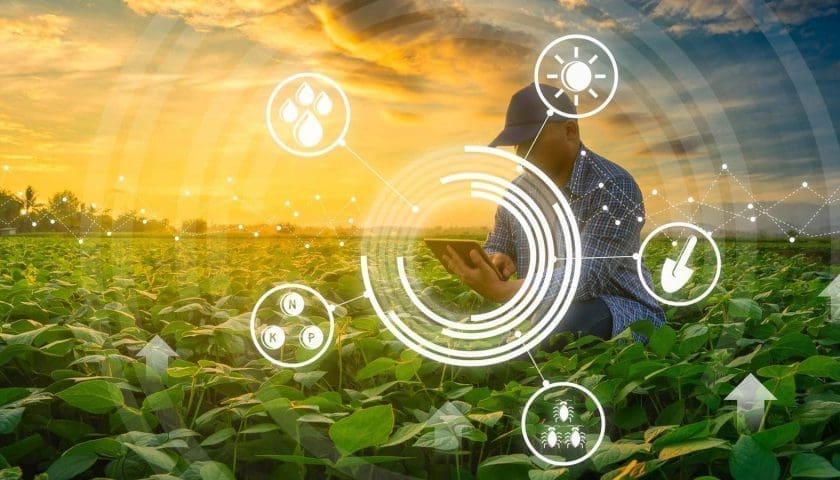
AFRICA- A recent report by the Global System for Mobile Communications Associations (GSMA) has revealed that the agriculture sector dominates artificial intelligence (AI) implementation in 49% of adoption cases.
The report, ‘AI for Africa: Use Cases Delivering Impact,’ was compiled from existing research data and interviews with stakeholders from academia, the private sector, NGOs, and civil society.
It was based on the analyses of more than 185 case scenarios across different sectors throughout Africa.
The analysis showed more than 90 cases where AI was implemented in agricultural systems in Kenya, Nigeria, and South Africa.
In these scenarios, the incorporation of AI involved the use of Machine Learning (ML) to provide valuable information on crop patterns, pest and weed control, land management and irrigation. In many of these applications, the use of AI and ML helped facilitate precision farming, predict yields, enhance crop monitoring and optimize resource utilization.
Their application also went a long way in automating tedious tasks like harvesting and weeding.
The use of ML and AI also helped equip farmers with data-driven advice, which helped them adopt efficient, climate-smart farming techniques that improved productivity.
These countries are known for their thriving tech ecosystems, whose advancements are increasingly applied to enhance food security and sustainable agriculture.
In nearly all reported incidences, solutions, and information reached farmers in real-time, which reiterates the importance of digital skills & literacy as well as device ownership.
However, despite the recorded success of AI adoption in agriculture, the report reiterated the implementation cases were fairly novel as part of pilot schemes.
The report calls for the widespread, commercially viable adoption of AI technologies in the agriculture sector.
The GSMA report also revealed AI is increasingly used for commercial agricultural advisory applications. It cited companies like ThriveAgric and TomorrowNow that provide insights to farmers through their digital devices using ML.
The report also recognizes the use of AI technology for financial services, like the case of Apollo Agriculture, which has developed an alternative, automated credit assessment method.
Although Africa represents only 2.5% of the global AI market by value, emerging innovations are set to enhance economic growth by USD 2.9 trillion by 2030.
There are opportunities for agritech to solve some of these agelong problems with the aid of artificial intelligence (AI) and allied technologies. In an earlier report this year, we noted that Africa’s AI market is projected to reach USD 6.9b in 2024, with widespread application across various sectors.
In Senegal, researchers are combining algorithms with Internet of Things (IoT) detectors to develop sustainable automated irrigation systems. A World Bank study from Ethiopia, Tanzania, and Uganda has shown promising results, indicating that machine learning can optimize agricultural clusters.
Local startups are also embracing these technologies. Nigerian agritech company Kitovu uses AI and data-driven agronomic advisory, employing remote sensing to reduce input costs, increase yields, and provide personalized soil and crop health analysis.
East Africa-based Grekkon specializes in AI-powered irrigation and greenhouses, benefiting tens of thousands of farmers.
As digital literacy and device ownership improve, the continent is poised to leverage AI and ML technologies to transform its agricultural sector and drive economic growth.
Sign up to receive our email newsletters with the latest news updates and insights from Africa and the World HERE.

Syngenta partners Ginkgo Bioworks to accelerate launch of biological solution
AFRICA- A recent report by the Global System for Mobile Communications Associations (GSMA) has revealed that the agriculture sector dominates artificial intelligence (AI) implementation in 49% of adoption cases.
The report, ‘AI for Africa: Use Cases Delivering Impact,’ was compiled from existing research data and interviews with stakeholders from academia, the private sector, NGOs, and civil society.
It was based on the analyses of more than 185 case scenarios across different sectors throughout Africa.
The analysis showed more than 90 cases where AI was implemented in agricultural systems in Kenya, Nigeria, and South Africa.
In these scenarios, the incorporation of AI involved the use of Machine Learning (ML) to provide valuable information on crop patterns, pest and weed control, land management and irrigation. In many of these applications, the use of AI and ML helped facilitate precision farming, predict yields, enhance crop monitoring and optimize resource utilization.
Their application also went a long way in automating tedious tasks like harvesting and weeding.
The use of ML and AI also helped equip farmers with data-driven advice, which helped them adopt efficient, climate-smart farming techniques that improved productivity.
These countries are known for their thriving tech ecosystems, whose advancements are increasingly applied to enhance food security and sustainable agriculture.
In nearly all reported incidences, solutions, and information reached farmers in real-time, which reiterates the importance of digital skills & literacy as well as device ownership.
However, despite the recorded success of AI adoption in agriculture, the report reiterated the implementation cases were fairly novel as part of pilot schemes.
The report calls for the widespread, commercially viable adoption of AI technologies in the agriculture sector.
The GSMA report also revealed AI is increasingly used for commercial agricultural advisory applications. It cited companies like ThriveAgric and TomorrowNow that provide insights to farmers through their digital devices using ML.
The report also recognizes the use of AI technology for financial services, like the case of Apollo Agriculture, which has developed an alternative, automated credit assessment method.
Although Africa represents only 2.5% of the global AI market by value, emerging innovations are set to enhance economic growth by USD 2.9 trillion by 2030.
There are opportunities for agritech to solve some of these agelong problems with the aid of artificial intelligence (AI) and allied technologies. In an earlier report this year, we noted that Africa’s AI market is projected to reach USD 6.9b in 2024, with widespread application across various sectors.
In Senegal, researchers are combining algorithms with Internet of Things (IoT) detectors to develop sustainable automated irrigation systems. A World Bank study from Ethiopia, Tanzania, and Uganda has shown promising results, indicating that machine learning can optimize agricultural clusters.
Local startups are also embracing these technologies. Nigerian agritech company Kitovu uses AI and data-driven agronomic advisory, employing remote sensing to reduce input costs, increase yields, and provide personalized soil and crop health analysis.
East Africa-based Grekkon specializes in AI-powered irrigation and greenhouses, benefiting tens of thousands of farmers.
As digital literacy and device ownership improve, the continent is poised to leverage AI and ML technologies to transform its agricultural sector and drive economic growth.
Sign up to receive our email newsletters with the latest news updates and insights from Africa and the World HERE.
Syngenta partners Ginkgo Bioworks to accelerate launch of biological solution
USA – Syngenta Crop Protection has announced a new collaboration with Ginkgo Bioworks that promises to enhance agricultural productivity and sustainability.
This partnership aims to fast-track the development and launch of a groundbreaking biological solution by leveraging advanced biotechnology and machine learning.
Syngenta, a global leader in agricultural innovation, and Ginkgo Bioworks, renowned for its platform in cell programming and biosecurity, are building on their previous successful partnership that focused on next-generation seed technology.
This new initiative will see Ginkgo Bioworks develop and optimize a microbial strain to achieve the productivity targets of a secondary metabolite from Syngenta’s Biologicals pipeline.
This metabolite is considered a pioneering solution in agriculture, and its efficient, cost-effective, and large-scale production is expected to significantly reduce Syngenta’s time to market for this latest innovation.
Ginkgo will utilize its expertise in Ag Biologicals, theoretical performance calculations, and rational strain engineering strategies to develop a robust microbial strain.
Ginkgo aims to generate insights from complex data sources, diagnose strain performance limitations, and discover new biological features that meet Syngenta’s goals by harnessing biological expertise and machine learning capabilities.
Camilla Corsi, Global Head of Research at Syngenta Crop Protection, expressed enthusiasm about the collaboration, stating, “Biologicals are increasingly important in addressing the need for efficient and sustainable agricultural solutions worldwide. Syngenta is committed to providing farmers with greater complementary product and technology choices that promote sustainable agricultural practices. We are excited to work with Ginkgo and are confident that their distinctive capabilities will enable us to achieve our productivity goals for our targeted molecule, expediting our time to market.”
Magalie Guilhabert, Head of ag biologicals at Ginkgo Bioworks, echoed this sentiment, saying that the company is excited to expand its relationship with Syngenta.
The two companies have built a successful relationship from their work together on plant traits and now look forward to doing the same with ag biologicals.
“Ginkgo is proud to put our excellent assets and experience against some of our customers’ toughest challenges. We’ll work to achieve productivity levels to realize commercial viability for Syngenta’s innovative ag biologicals product launch.”
Sign up to receive our email newsletters with the latest news updates and insights from Africa and the World HERE.