
Published
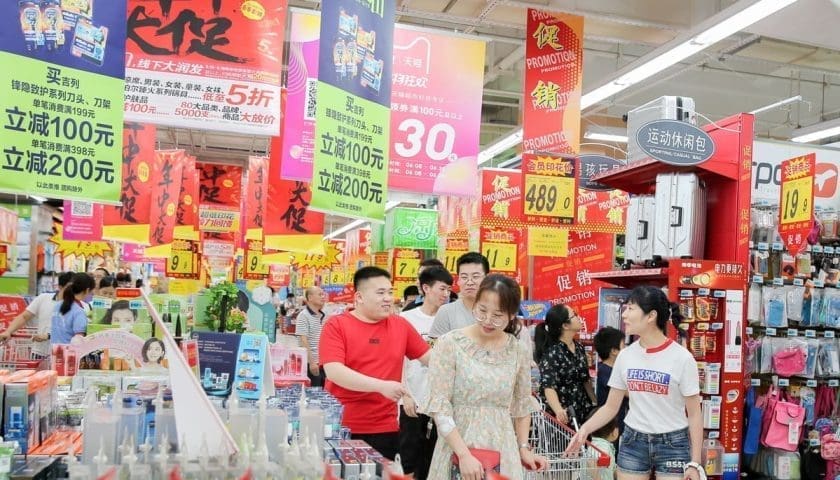
CHINA- According to a joint report by the China Shopper Report, Bain & Company, and Kantar Worldpanel, FMCG spending increased by 2% in Q1 2024, with sales volumes increasing by 3.5% in a show of recovery of the sector.
In the reported quarter, the packaged food and beverage sector experienced a value growth of 2.7% and 4.3%. The report also revealed that the urban FMCG market grew by 1.9%, mostly because buyers delayed purchases before the mid-year promotion season.
China’s Eastern region outgrew other areas, recording a 7% valuation growth in the reported quarter, partly driven by economic vitality and resilient consumer purchasing power despite high inflation.
The report also showed a 4.6% increase in urban retail sales, influenced by improved customer demand and current retail trends. Lower-tier cities continued to outpace upper-tier cities in driving FMCG market growth, with town market sales up by 3.9% (year-on-year) YoY, surpassing city sales.
The report showed a shift towards smaller retail outlets, as hypermarkets saw a 1.4% decline while supermarkets expanded by 1.3%. Membership stores also witnessed a robust 20% sales growth.
The joint report reiterated although the FMCG market shows signs of recovery, customers remain price-conscious. It advised players to balance input and operational costs affected by high inflation and attractive pricing.
The report also revealed that international players are increasing interest in the Chinese market.
Derek Deng, Senior Partner at Bain & Company said, “Most leading multinational FMCG players have already acknowledged the importance of the Chinese market and are paying greater attention towards localized supply chain in order to stay close to market trends.”
The joint report advised local players to leverage young people’s increasing confidence and interest in online shopping. Players were advised to concentrate on long-term strategies and cement their brand image.
This interest is driven by platforms like Douyin, the Chinese version of TikTok, which has managed to catch up with players like Alibaba and JD.
The offline FMCG market also showed recovery and potential for continued growth, with a 2.4% valuation increase. Physical store visits contributed to this growth despite e-commerce’s 2% valuation increase.
Liked this article? Subscribe to Food Business Africa News, our regular email newsletters with the latest news insights from Africa and the World’s food and agro industry. HERE
No related posts.
We use cookies to improve your experience on our site. By using our site, you consent to cookies.
Manage your cookie preferences below:
Essential cookies enable basic functions and are necessary for the proper function of the website.
These cookies are needed for adding comments on this website.
Google's current Sign in with Google client library. It renders the Google sign-in button, or the One Tap prompt, so visitors can log in to your site with their Google account. It replaces the older Google Sign-In platform library.
Service URL: policies.google.com (opens in a new window)
Google Tag Manager simplifies the management of marketing tags on your website without code changes.
Statistics cookies collect information anonymously. This information helps us understand how visitors use our website.
Google Analytics is a powerful tool that tracks and analyzes website traffic for informed marketing decisions.
Service URL: policies.google.com (opens in a new window)
WPMU DEV Analytics is the visitor statistics feature of the WPMU DEV Dashboard plugin. It reports traffic and visitor behavior inside The Hub using a Matomo analytics instance hosted by WPMU DEV.
Service URL: wpmudev.com (opens in a new window)
Marketing cookies are used to follow visitors to websites. The intention is to show ads that are relevant and engaging to the individual user.
AddToAny provides share and follow buttons that let visitors post your pages to social networks, messaging apps, and bookmarking services.
Service URL: www.addtoany.com (opens in a new window)