

NoPalm’s study confirms market readiness of yeast oil as palm oil substitute
The independent study has confirmed that consumers not only accept yeast oil as a sustainable palm oil alternative, but prefer it in terms of health and environmental appeal.
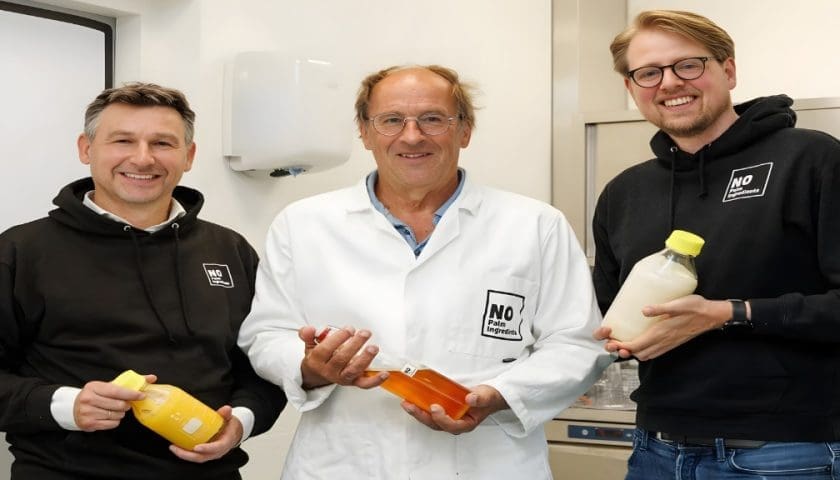
THE NETHERLANDS – A new independent consumer study by NoPalm Ingredients, conducted across Germany, France, and the Netherlands, shows that yeast oil, a fermentation-based palm oil alternative, is accepted by consumers.
In Germany and France, consumers rated products made with yeast oil higher in appeal, health perception, and environmental friendliness compared to palm oil. Even with limited prior awareness, consumers across all three countries showed strong purchase intent.
This is a significant step forward for food brands aiming to reformulate with sustainable fat alternatives.
The study focused on margarine, a daily-use product with high oil content, as a test case for broader application. In all three countries, the response reflected that yeast oil meets and exceeds the action standard for consumer acceptance.
“This is an important milestone for both NoPalm Ingredients and the alternative fats industry. For the first time, we have robust, independent data showing that brands can switch to yeast oil without losing consumer acceptance or purchase intent,” Julie Cortal, Head of Business Development at NoPalm Ingredients, remarked.
Additionally, when presented with the environmental and functional benefits of yeast oil, consumers’ interest increased significantly.
“That unlocks a critical path to market entry and scalable adoption for an entirely new category of sustainable oils,” Julie Cortal added.
Consumer confidence and market readiness
The study also explored consumers’ responses to different labelling options on-pack. All yeast oil references tested met the industry’s action standard, with the phrase “oil of yeast origin” performing exceptionally well in terms of clarity.
“Clear consumer labelling is not only a commercial advantage, but also a regulatory requirement. Our data shows that ‘yeast oil’ is both well-understood and accepted by consumers. It has potential to be recognized as a customary name under EU regulations, an important step toward compliant and scalable market access,” Leoniek Robroch, Regulatory Affairs Manager at NoPalm Ingredients said.
This further supports food brands in gaining consumer confidence while navigating regulatory frameworks with fewer hurdles.
For product development teams, marketers, and R&D leads, this study provides rare early-stage validation. It confirms that yeast oil can be used in mainstream food applications without compromising on consumer acceptance and offers a low-risk route for reformulation with sustainable fats.
For customers and innovation partners, it adds another layer of proof. Yeast oil is a viable, scalable ingredient ready for market.
NoPalm Ingredients produces oil through a fermentation-based circular process, feeding yeast with upcycled agrifood side streams. This results in an ingredient that delivers full functionality, taste, texture, and performance, with a fraction of the environmental footprint.
Compared to palm oil, their process cuts CO₂ emissions by 90% and land use by 99%.
This study marks a new chapter in bringing that solution to market, with data-driven confidence for food brands ready to lead.
REVÓLEO™ yeast oil
With the launch of REVÓLEO™ portfolio and the first products set to hit the market in 2026, NoPalm ingredients is set to move yeast oil from validation to commercial reality.
REVÓLEO™ Soft is a refined and deodorized microbial oil produced by non-GMO yeast fermentation.
REVÓLEO™ for Food provides a sustainable alternative to tropical oils for diverse food applications – from dairy and confectionery to plant-based alternatives, replacing vegetable fats like palm oil, palm olein, shea butter, or even cocoa butter but also milk fat in a wide variety of applications
The brand’s first demonstration factory will also come online in 2026, bringing NoPalm’s scalable, fermentation-based production to industrial levels.
Founded in June 2021, NoPalm Ingredients is an innovator in the green parallel oil & fat industry, set to address the environmental and supply chain challenges of conventional palm oil, which is found in 60% of supermarket products.
Sign up HERE to receive our email newsletters with the latest news and insights from Africa and around the world, and follow us on our WhatsApp channel for updates.

