

Cornell scientists unlock stable natural blue dye from algae
This heat- and light-stable natural blue food dye from the algae-derived protein phycocyanin offers a cleaner alternative to Blue No. 1 and Blue No. 2 synthetic dyes.
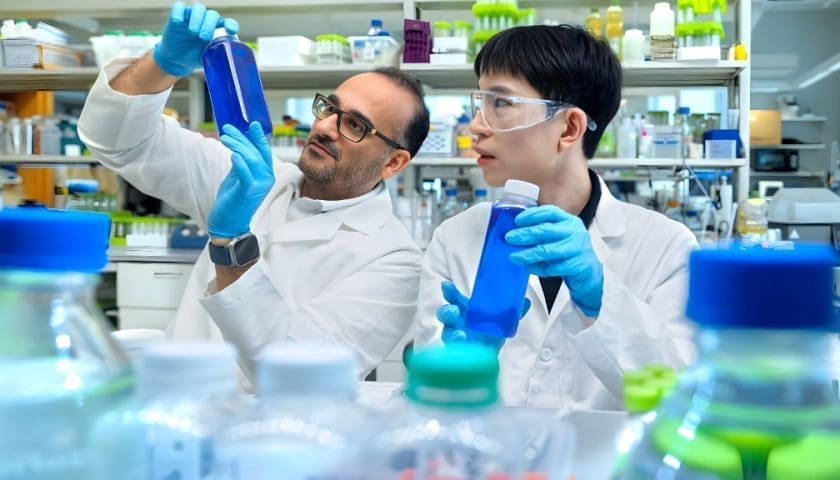
U.S.A – Cornell University researchers have successfully engineered a more stable natural blue food dye derived from the protein phycocyanin, extracted from algae.
This blue dye offers a sustainable alternative to the long-scrutinised synthetic food colourants, Blue dye 1 and Blue dye 2, which are traditionally made from petroleum-based sources.
Published in the prestigious journal Food Hydrocolloids, the study was led by Alireza Abbaspourrad, the Yongkeun Joh Associate Professor of Food Chemistry and Ingredient Technology, together with his team, who explored the significant advancements in the stability and efficacy of phycocyanin.
The research highlights the potential of phycocyanin as a vibrant colorant and its dual functionality as a natural emulsifier, addressing consumer demand for cleaner, healthier food ingredients.
“Consumers don’t want artificial ingredients in their food,” said Qike Li, lead author of the study and a doctoral candidate in Professor Alireza Abbaspourrad’s lab.
“They want something healthier and more natural. Specifically, they want to see a ‘clean label,’ which is a major reason we’ve worked to increase the functionality of phycocyanin.”
Phycocyanin is the same compound that gives spirulina its vibrant blue color. While it has been used as a natural dye before, its instability under heat and light has made it unsuitable for large-scale food production.
To bridge this gap, the Cornell team used a denaturant to break the protein into smaller, more uniform fragments, which not only retained their striking blue color but also became better emulsifiers, capable of protecting and delivering nutrients in oils.
The researchers then used small-angle X-ray scattering (SAXS) to view the protein’s nanoscale structure, ensuring the transformation was both practical and stable.
“It’s like using a magnifying glass to understand protein behavior. Our goal is for phycocyanin to replace multiple synthetic items, colorant, emulsifier, and antioxidant, all in one,” said Abbaspourrad, the Yongkeun Joh Associate Professor of Food Chemistry and Ingredient Technology.
The innovative approach facilitated the creation of emulsions that not only exhibit a striking blue hue but also possess the capability to protect and deliver essential nutrients in oil.
This dual-purpose functionality distinguishes phycocyanin from its synthetic counterparts, which cannot often contribute additional health benefits.
The team’s work shifts the paradigm from merely supplementing food with colorants to enhancing the overall nutritional profile of food products using a natural source.
It offers timely insights at a crucial moment in the United States’ artificial dyes movement, where several consumer goods manufacturers are actively eliminating synthetic color additives from their supply chains.
Notably, recent bans on Red No. 3 and restrictions on other dyes like Blue No. 1 and Yellow No. 5 illustrate a significant shift towards advocating for safer, more natural food options.
Abbaspourrad noted that while there may be initial costs associated with integrating phycocyanin as a replacement for traditional blue food dyes, the long-term benefits resulting from its healthful properties and appearance will prove economically viable for food producers.
While natural alternatives are typically more expensive and less shelf-stable, Abbaspourrad believes this solution is different. “The cost is likely reasonable, especially when you factor in the health benefits and consumer demand,” he said.
With support from the U.S. Department of Agriculture, the team now aims to scale the technology with industry partners.
Sign up HERE to receive our email newsletters with the latest news and insights from Africa and around the world, and follow us on our WhatsApp channel for updates.

