
FPT Group launches Durban terminal modernization with AI, advanced cooling, off-site cold storage
The long-term vision is to reduce the number of reefer trucks by improving integration with the rail network.
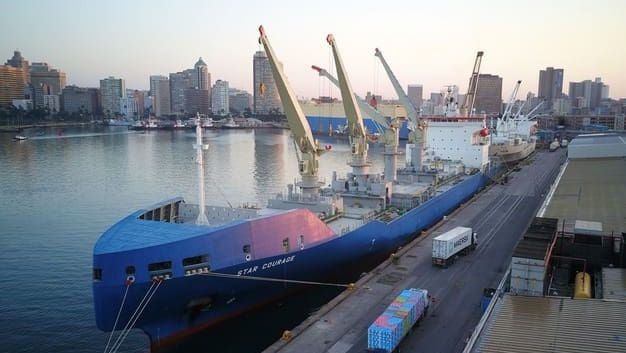
SOUTH AFRICA – FPT Group has announced a full refurbishment of its Durban terminal, incorporating advanced cooling technologies, AI-driven warehouse management, and off-site cold storage at Cato Ridge.
The company operates private port terminals at Durban, Port Elizabeth (Gqeberha), and Cape Town, with all of South Africa’s conventional reefer vessel shipping loaded at FPT terminals.
Refurbishment Scope and Timeline
“Our Durban facility is now over 30 years old, and we need greater efficiency. We need better, faster cooling and improved processing of the fruit so that we can address all cost-related deficiencies. New cooling technologies are much more efficient and quicker, which is better for the product,” said Paulo Franco, Managing Director of FPT Group.
Starting towards the end of the current citrus season, every office and building at Durban FPT is due for reconstruction. “We’re going to do a full refurbishment of the facility, with modern equipment, all-new cold rooms, and all-new cooling facilities. Everything you see inside the building will disappear, and modern, state-of-the-art equipment will be installed.”
AI Integration and Rail Shift
“We’re also investing heavily in AI for our own warehouse management system. It’s a long conversation when it comes to AI,” Franco observed, “but we’re putting quite some money behind that to evaluate what benefits we can extract from it to improve the processes.”
The long-term vision is to reduce the number of reefer trucks by improving integration with the rail network. Franco said they are working on projects stemming from the greenfield construction of cold rooms in Cato Ridge, a back-of-port facility of 35,000 square metres situated 50 kilometres from Durban harbour.
Industry Perspective
Recent floods have caused major disruptions in the Eastern and Western regions, potentially affecting export volumes. “We’re still waiting for producers to tell us what the impact will be on the fruit forecast. It’s a difficult one,” Franco remarked.
The Citrus Growers’ Association estimated that the northern corridor could require an additional 1,000 reefer truck trips per week, while the Eastern and Western Cape corridors would need at least another 1,400 trips during peak season.
Lastly, by 2047, this will be South Africa’s youngest and most modern port terminal, transforming the facility into a state-of-the-art gateway for fruit shipments and improving the speed and cost-effectiveness of the nation’s agricultural supply chain.
Sign up HERE to receive our email newsletters with the latest news and insights from Africa and around the world, and follow us on our WhatsApp channel for updates.