Air cargo rates to ease after US-Iran ceasefire, but recovery will take months
Niall van de Wouw, Xeneta’s Chief Airfreight Officer, said this has been a supply issue from the start.
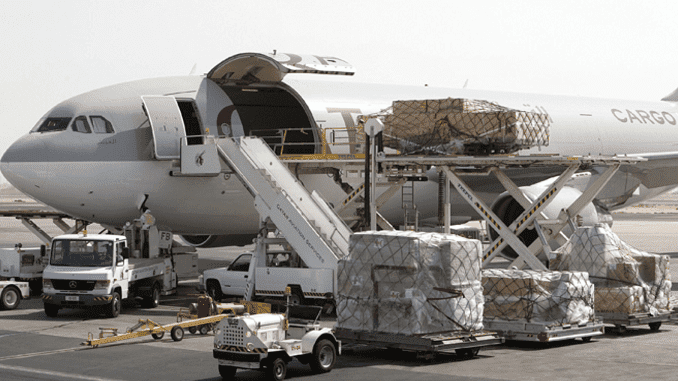
GLOBAL – The US-Iran ceasefire has eased air cargo rates, but capacity recovery across Middle East routes will take one to two months.
For fresh produce exporters and food logistics investors, this timeline means ongoing high costs for time-sensitive perishable shipments between Asia, Europe, and the Middle East.
Rate Surges Across Key Trade Lanes
Xeneta data for the week ending 5 April shows how sharply rates have increased. Air cargo spots rose by 105% on the South Asia to Europe corridor. Rates were also up by 87% from Europe to the Middle East, 84% from South Asia to the Middle East, 82% from South Asia to North America, and 72% from Southeast Asia to Europe.
Airspace restrictions across the Gulf following the conflict forced airlines to ground aircraft and reduce capacity on key freight corridors, creating a supply shortage and pushing rates sharply higher. The impact was most evident on routes linking Southeast Asia to Europe and South Asia to Europe.
Direct Statements from Industry Expert
Niall van de Wouw, Xeneta’s Chief Airfreight Officer, said this has been a supply issue from the start. The moment airlines increase flights through Middle East airspace, it will ease pressure on existing capacity and put downward pressure on rates.
Van de Wouw cautioned that rates will not fall as quickly as they rose. “Even when it is deemed safe to fly, rebuilding infrastructure takes time, customers need to find and trust services again, and insurers may still advise against using Middle East hubs despite the ceasefire.”
He added that carriers will be in no rush to lower rates, given that the ceasefire is only temporary and the geopolitical situation remains uncertain. Iran’s re-closure of the Hormuz Strait shortly after the agreement adds to the uncertainty, reinforcing cautious behaviour across the market.
Outlook for Food Logistics
For food businesses shipping perishable goods, persistently high air freight rates will continue to pressure margins on time-sensitive exports such as berries, avocados, cut flowers, and premium meats.
Van de Wouw noted that shippers will not rush into major routing decisions based on a fragile two-week ceasefire, as the timeline is too short to justify restructuring freight plans. While falling jet fuel prices are expected to exert some downward pressure, constrained capacity and cautious decision-making are likely to delay a full recovery. Therefore, Investors should plan for elevated logistics costs through mid-2026.
Sign up HERE to receive our email newsletters with the latest news and insights from Africa and around the world, and follow us on our WhatsApp channel for updates.