

Ultraprocessed food, beverage ban takes effect in Arizona schools
According to the law, ultra-processed, industrially manufactured, nutrient-depleted food with synthetic additives is under-nourishing minors at public schools and contributing to childhood obesity.
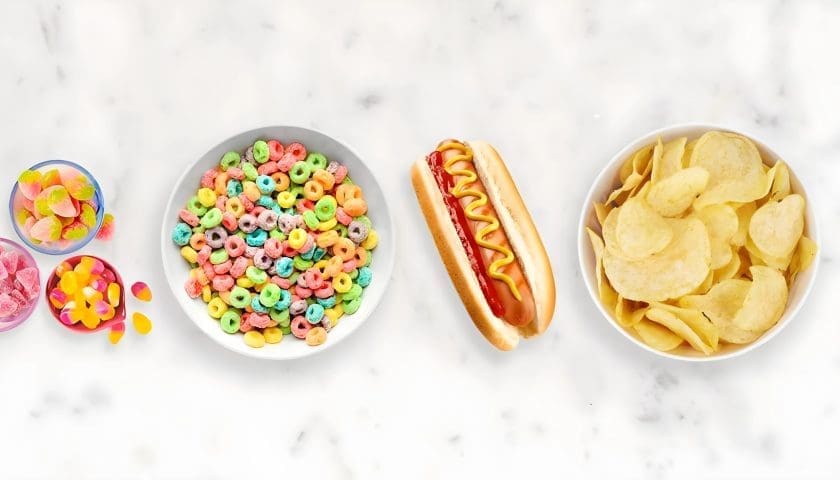
USA – Arizona Governor Katie Hobbs recently signed into law the Arizona Healthy Schools Act, which bans the serving of ultra-processed foods and beverages in any public school by the 2026–2027 school year.
The Arizona law requires that any public school that participates in a federally funded or assisted meal program shall not serve, sell or allow a third party to sell ultra-processed food on the school campus during the normal school day.
It targets eleven ingredients: Synthetic dyes Yellow No. 5 and No. 6, Blue No. 1 and No. 2, Red No. 3 and No. 40, Green No. 3, potassium bromate, propylparaben, titanium dioxide and brominated vegetable oil.
Leo Biasiucci, a state representative, was the primary sponsor of the bill, which passed 59-0 in the House on Feb. 24 and 28-0 in the Senate on April 8, 2025.
He credited the U.S. Health and Human Services Secretary Robert F. Kennedy Jr.’s “Make America Healthy Again” (MAHA) agenda as motivation for the bill, saying, “This is a public health issue. We now have overwhelming evidence that these chemicals can contribute to everything from hyperactivity to increased cancer risk—yet they remain in school meals.”
According to the law, ultra-processed, industrially manufactured, nutrient-depleted food with synthetic additives is under-nourishing minors at public schools and contributing to childhood obesity.
Melissa Harvey, public policy and legislative chair of the School Nutrition Association of Arizona and Food and Nutrition Services Supervisor at Madison Elementary School District, stated that most schools are currently compliant or close to compliance.
She said items likely to be impacted most by the bill are condiments and specific snacks.
“Because we already follow such stringent meal pattern requirements … most schools are already pretty much in compliance and will have no problem meeting these requirements,” Harvey said.
Dropped proposals
Notably missing from the bill passed is a US$3.8 million appropriation to cover the co-pay for students qualifying for reduced-priced lunch.
That proposal, coming from another measure, House Bill 2213, introduced by Rep. Nancy Gutierrez, D-Tucson, and based on the governor’s executive budget, would have allocated money to cover meals for more students fully.
The proposal encountered little opposition as it progressed through the House Education and Appropriations Committees and the Committee of the Whole, but ultimately failed to secure a final vote.
“I would think if you want to make America healthy, you would know that you have to feed students first,” Gutierrez said. “So it’s very frustrating that they want to proclaim that they really care about what students eat, but they truly do not care if students eat.”
Biasiucci’s original bill sought to ban candy, too, but he said defining candy in law proved more difficult than expected.
“A lot of times you have to sacrifice your language, you have to make edits, make amendments to get it across the finish line… I wanted to get the bill across the finish line, because sometimes you need to have that impact, you need to make that change happen before the conversation continues in the future,” Biasiucci said.
Arizona joins California, West Virginia, Virginia, and Utah in enacting laws to restrict foods served at schools.
Sign up HERE to receive our email newsletters with the latest news and insights from Africa and around the world, and follow us on our WhatsApp channel for updates.