Published

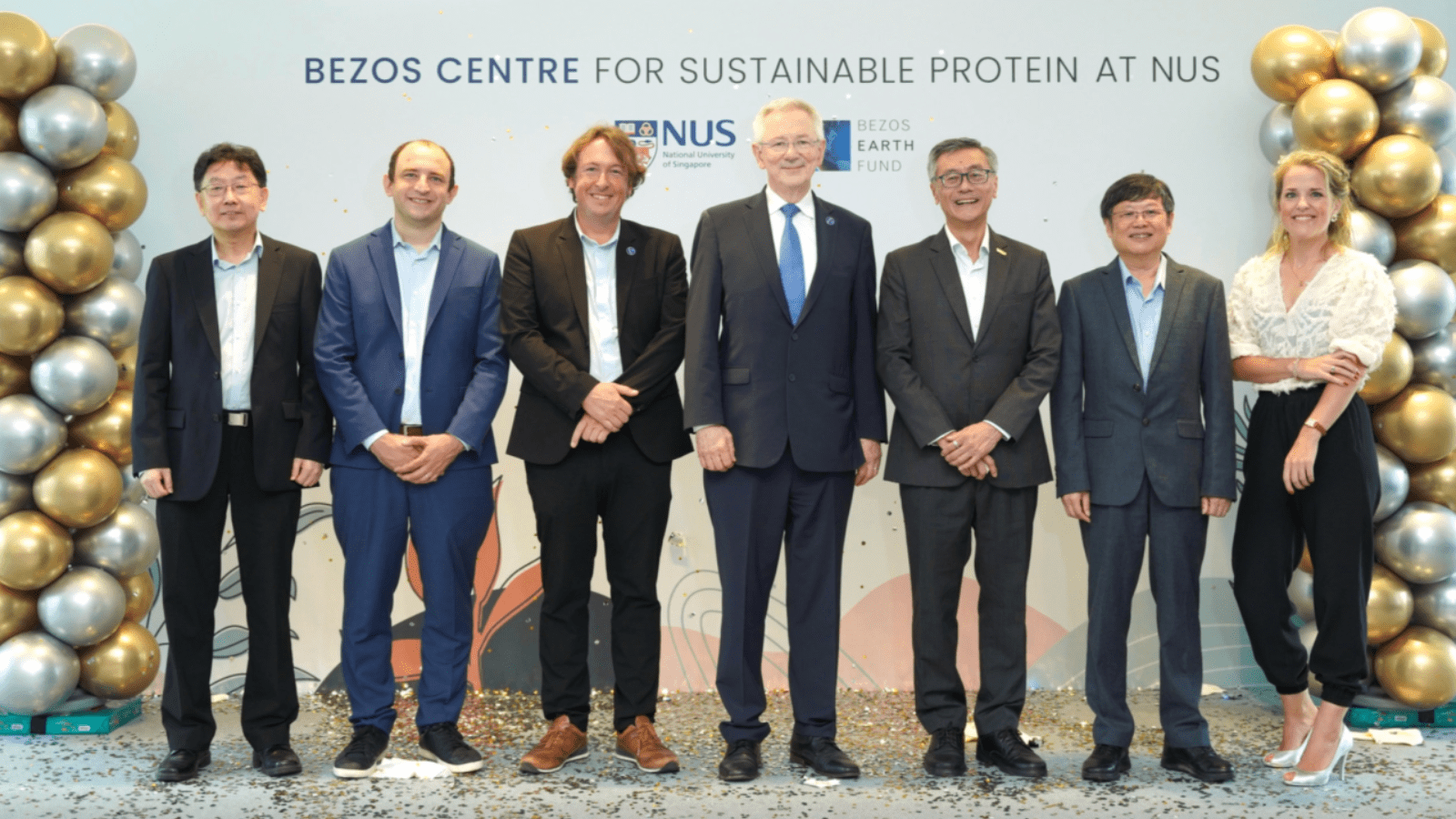
SINGAPORE – The Bezos Earth Fund has announced a significant investment of US$30 million towards the establishment of the Bezos Centre for Sustainable Protein at the National University of Singapore (NUS).
This funding marks a major step in the fund’s broader initiative to reshape global food systems, with a US$1 billion commitment to this cause.
The launch event, which took place early September, featured Mirte Gosker, Managing Director of GFI APAC, as a keynote speaker.
The ceremony was attended by Singapore’s President Tharman Shanmugaratnam, who is also the Chancellor of NUS.
The new centre in Singapore is part of a global network of Bezos Centres dedicated to addressing challenges in the alternative protein sector.
Similar facilities will be established at Imperial College London and North Carolina State University, creating a triad of research hubs aimed at advancing sustainable protein solutions.
This news comes as the alternative protein market, already experiencing notable growth, is expected to expand significantly.
It was valued at approximately US$73.4 billion in 2022 and is forecasted to reach US$423 billion by 2033, with a compound annual growth rate (CAGR) of 19%.
This expansion is driven by rising consumer demand and innovations in protein alternatives, including plant-based and microbial proteins.
The shift towards veganism has increased the popularity of plant-derived proteins, such as those from peas, soy, and nuts, while interest in microbial proteins is anticipated to rise during the forecast period.
Sign up to receive our email newsletters with the latest news updates and insights from Africa and the World HERE
No related posts.
We use cookies to improve your experience on our site. By using our site, you consent to cookies.
Manage your cookie preferences below:
Essential cookies enable basic functions and are necessary for the proper function of the website.
These cookies are needed for adding comments on this website.
Google's current Sign in with Google client library. It renders the Google sign-in button, or the One Tap prompt, so visitors can log in to your site with their Google account. It replaces the older Google Sign-In platform library.
Service URL: policies.google.com (opens in a new window)
Google Tag Manager simplifies the management of marketing tags on your website without code changes.
Statistics cookies collect information anonymously. This information helps us understand how visitors use our website.
Google Analytics is a powerful tool that tracks and analyzes website traffic for informed marketing decisions.
Service URL: policies.google.com (opens in a new window)
WPMU DEV Analytics is the visitor statistics feature of the WPMU DEV Dashboard plugin. It reports traffic and visitor behavior inside The Hub using a Matomo analytics instance hosted by WPMU DEV.
Service URL: wpmudev.com (opens in a new window)
Marketing cookies are used to follow visitors to websites. The intention is to show ads that are relevant and engaging to the individual user.
AddToAny provides share and follow buttons that let visitors post your pages to social networks, messaging apps, and bookmarking services.
Service URL: www.addtoany.com (opens in a new window)