
Published
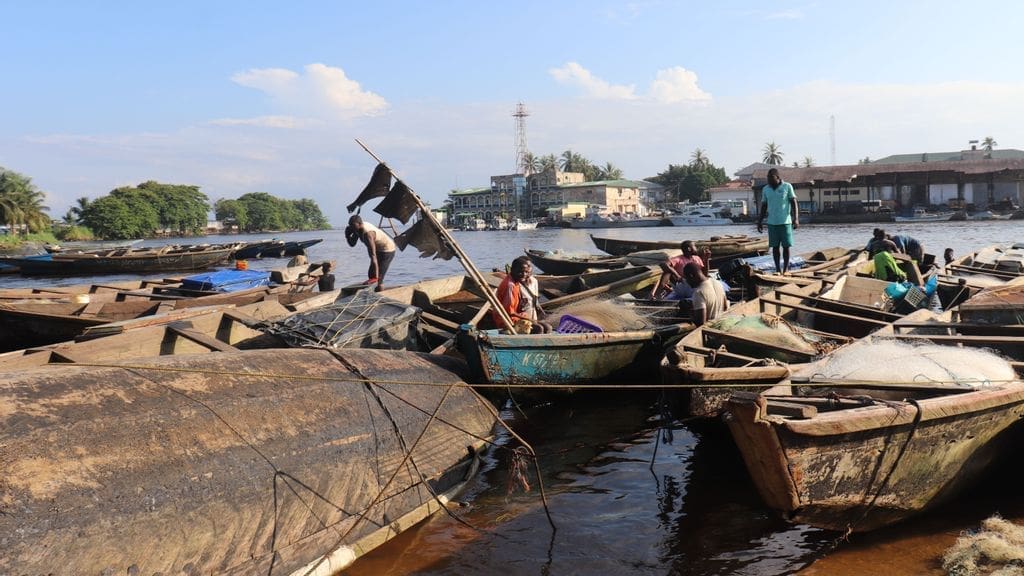
CAMEROON – Cameroon has ramped up its efforts to combat illegal, unreported, and unregulated (IUU) fishing with the passage of a new law targeting subsidies in the maritime fishing sector.
This legislation, approved by the National Assembly on June 21 and the Senate on July 6, empowers the President to ratify an amendment to the Marrakech Agreement of the World Trade Organization (WTO).
The amendment, which incorporates the June 17, 2022, Agreement on Fisheries Subsidies into Annex 1A, aims to curtail subsidies that promote overfishing and jeopardize marine resource sustainability.
Cameroonian officials view this ratification as an opportunity to enhance national capabilities for monitoring and controlling fishing activities.
By eliminating subsidies to foreign industrial vessels accused of depleting Cameroon’s territorial waters, the country also seeks to access funding from the WTO fisheries fund to improve fisheries management and promote sustainable exploitation of marine resources.
This legislative action is part of a broader governmental strategy to reform and develop a sector crucial to the national economy.
The decision to ratify the agreement has partly been influenced by recent pressure from the European Union (EU).
In January 2023, Cameroon was sanctioned by the EU with a “red card” for its inadequate cooperation in responsible marine resource management.
This reprimand has galvanized national efforts to combat IUU fishing, which threatens fish stock sustainability and undermines the marine ecosystem.
In other news, the Cameroonian fishing industry has been underperforming.
According to the National Institute of Statistics (INS), the country’s fish imports dropped from 241,798 tons in 2022 to 234,572 tons in 2023.
This 3% decline, amounting to 7,226 tons, is significant, but the decrease in import value is even more notable.
The cost of fish imports fell by CFA20 billion (US$33 million), from CFA202.6 billion (US$335 million) to CFA182.5 billion (US$302 million), marking a 10% reduction.
Despite government efforts to boost production, Cameroon continues to face a substantial gap between fish production and demand, which remains around 500,000 tons annually.
The deficit has slightly worsened, reaching 270,000 tons.
Sign up to receive our email newsletters with the latest news updates and insights from Africa and the World HERE.
No related posts.
We use cookies to improve your experience on our site. By using our site, you consent to cookies.
Manage your cookie preferences below:
Essential cookies enable basic functions and are necessary for the proper function of the website.
These cookies are needed for adding comments on this website.
Google's current Sign in with Google client library. It renders the Google sign-in button, or the One Tap prompt, so visitors can log in to your site with their Google account. It replaces the older Google Sign-In platform library.
Service URL: policies.google.com (opens in a new window)
Google Tag Manager simplifies the management of marketing tags on your website without code changes.
Statistics cookies collect information anonymously. This information helps us understand how visitors use our website.
Google Analytics is a powerful tool that tracks and analyzes website traffic for informed marketing decisions.
Service URL: policies.google.com (opens in a new window)
WPMU DEV Analytics is the visitor statistics feature of the WPMU DEV Dashboard plugin. It reports traffic and visitor behavior inside The Hub using a Matomo analytics instance hosted by WPMU DEV.
Service URL: wpmudev.com (opens in a new window)
Marketing cookies are used to follow visitors to websites. The intention is to show ads that are relevant and engaging to the individual user.
AddToAny provides share and follow buttons that let visitors post your pages to social networks, messaging apps, and bookmarking services.
Service URL: www.addtoany.com (opens in a new window)