Published

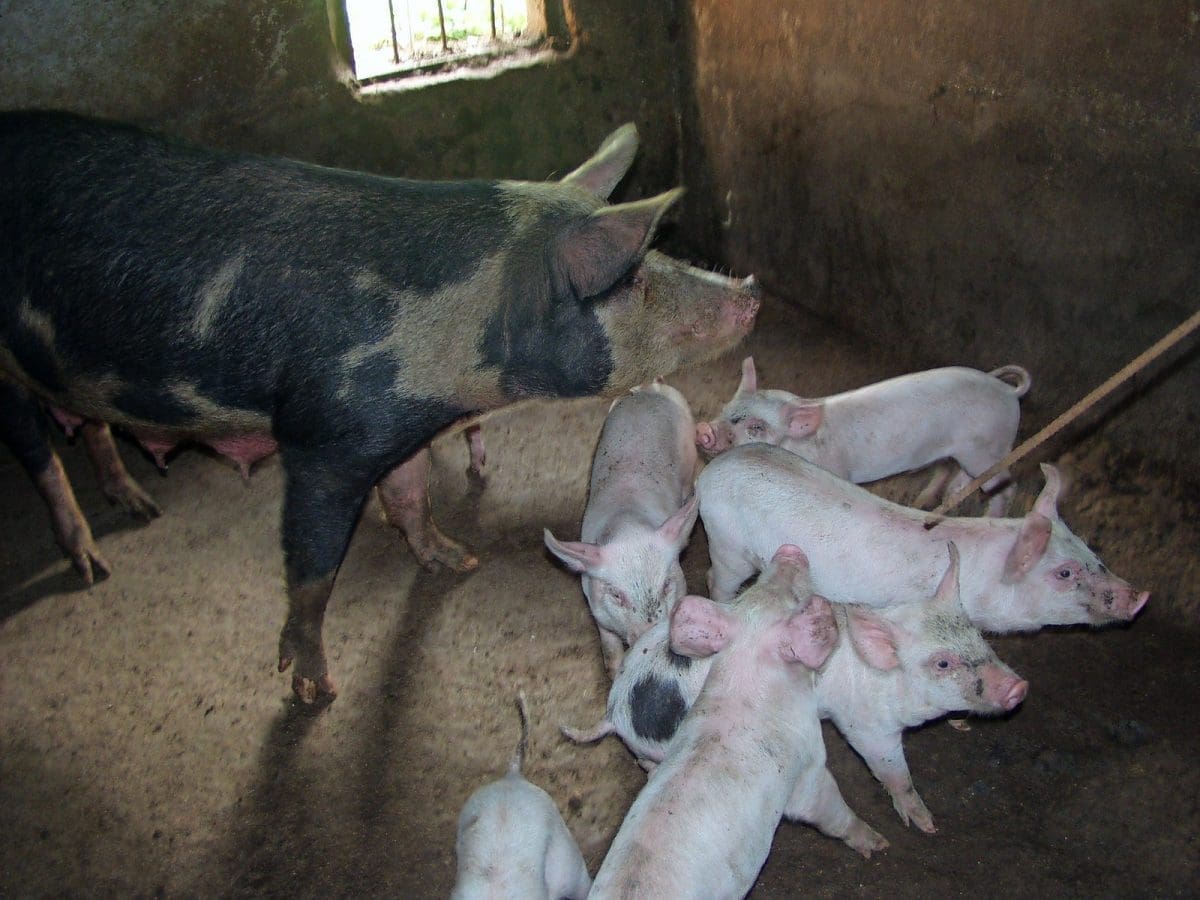
CHINA – China has announced a ban on direct and indirect imports of pigs, wild boars, and related products from Laos following the country’s first reported outbreaks of African swine fever (ASF) on June 20.
The General Administration of Customs emphasized that any pigs or related products from Laos intercepted by border defense authorities would be destroyed under customs supervision.
The disease, which has been spreading across Asia, was recently confirmed in Laos’ southern province of Saravane, as reported by the Paris-based World Organisation for Animal Health.
ASF, a lethal viral disease for pigs, poses no threat to human health but can have severe economic implications by causing pork shortages and trade disruptions.
With no available treatment or vaccine, prevention remains the primary defense against the virus.
The spread of ASF is not confined to Asia.
In Germany, ASF has been detected for the first time in wild boar in the western region.
A wild boar tested positive for ASF near Rüsselsheim in Hessen, close to Frankfurt-am-Main.
The sick animal was culled after testing positive on June 14, and two nearby wild boar carcasses tested negative for the virus.
Authorities have responded by erecting fences to prevent further spread.
The Hessen region, which is about 500 kilometers from the Polish border and not previously linked to ASF-affected areas, has around 5,600 pigs across 76 farms.
One of the larger farms houses approximately 2,000 pigs.
The origin of the virus in this area is uncertain, but it may be related to wild boars consuming contaminated waste near motorways A60 and A67.
Liked this article? Subscribe to Food Business Africa News, our regular email newsletters with the latest news insights from Africa and the World’s food and agro industry. HERE
No related posts.
We use cookies to improve your experience on our site. By using our site, you consent to cookies.
Manage your cookie preferences below:
Essential cookies enable basic functions and are necessary for the proper function of the website.
These cookies are needed for adding comments on this website.
Google's current Sign in with Google client library. It renders the Google sign-in button, or the One Tap prompt, so visitors can log in to your site with their Google account. It replaces the older Google Sign-In platform library.
Service URL: policies.google.com (opens in a new window)
Google Tag Manager simplifies the management of marketing tags on your website without code changes.
Statistics cookies collect information anonymously. This information helps us understand how visitors use our website.
Google Analytics is a powerful tool that tracks and analyzes website traffic for informed marketing decisions.
Service URL: policies.google.com (opens in a new window)
WPMU DEV Analytics is the visitor statistics feature of the WPMU DEV Dashboard plugin. It reports traffic and visitor behavior inside The Hub using a Matomo analytics instance hosted by WPMU DEV.
Service URL: wpmudev.com (opens in a new window)
Marketing cookies are used to follow visitors to websites. The intention is to show ads that are relevant and engaging to the individual user.
AddToAny provides share and follow buttons that let visitors post your pages to social networks, messaging apps, and bookmarking services.
Service URL: www.addtoany.com (opens in a new window)