
EPA approves Soilcea’s CarriCea T1, first CRISPR-edited citrus rootstock to fight greening disease
The timing of the approval allows the new rootstock to be planted before the 2026/2027 citrus season.
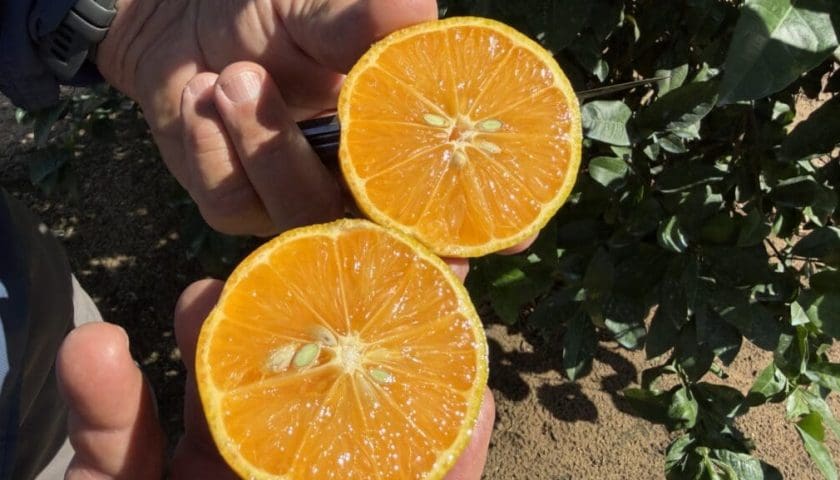
UNITED STATES – The Environmental Protection Agency (EPA) has approved Soilcea’s CarriCea T1, a first-of-its-kind CRISPR-edited citrus rootstock designed to tolerate citrus greening disease, one of the industry’s biggest threats worldwide.
Developed by Florida-based scientists at the University of Florida and the biotech company Soilcea, rootstock uses gene-editing technology to prevent the bacterium that causes greening from interacting with the plant, limiting infection without altering fruit quality.
“This innovative tool for growers is giving our industry renewed confidence in the future as we work to recover and recover,” said Florida Citrus Mutual Board President Kevin Koppelman.
Citrus greening, transmitted by the Asian citrus psyllid, was first detected in Florida in 2005, leading to significant production declines, higher input costs, and loss of grove acreage.
Firstly, the economic benefits of disease-tolerant rootstocks are substantial. Greening has compelled growers to increase pesticide applications, raising input costs and environmental impact. CarriCea T1 reduces spraying requirements, lowering production costs and improving yield stability.
Secondly, the timing of the approval allows the new rootstock to be planted before the 2026/2027 citrus season. “We’re getting these CarriCea T1 trees ready to go for growers. We have 200,000 of these trees going through the nursery pipeline,” said Yianni Lagos, Soilcea President and CEO.
In addition, fruit produced by the new rootstock is indistinguishable from that produced by other citrus rootstocks, and environmental and human health risk assessments have detected no reasonable risks.
Compared to traditional pest management, CRISPR-edited rootstocks offer a more sustainable solution.
Moreover, traditional methods are expensive, labor-intensive, and only partially effective. Gene-edited tolerance works continuously within the plant, requiring no additional labour once trees are established.
Therefore, the newly approved rootstock provides Florida citrus growers with another safe, innovative tool, reducing pesticide spraying and reliance on imports while bolstering domestic citrus production and economic growth.
Lastly, while broad implementation will take time, the EPA approval marks a turning point, encouraging renewed investment and reinforcing confidence in the future of Florida’s signature crop.
Ultimately, this milestone could accelerate similar approvals for edited rootstocks targeting other devastating diseases in citrus and other tree crops worldwide.
The University of Florida and Soilcea developed this cutting-edge approach, which serves as a model for growers worldwide facing threats from pests and diseases. In addition, the approval is effective immediately, allowing CarriCea T1 to be planted this season.
Sign up HERE to receive our email newsletters with the latest news and insights from Africa and around the world, and follow us on our WhatsApp channel for updates.