Published

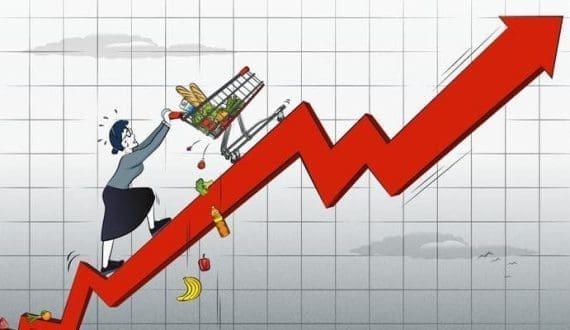
SOUTH AFRICA—The South African Reserve Bank (SARB) has revealed that the country’s food inflation has declined for the seventh consecutive month to reach a four-year low of 4.1% on a year-on-year (YoY) basis in June 2024 compared to June 2023.
Food subcategories aside from bread, cereals, and meat continued to decline and were led by oils and fats. Annual bread and cereal inflation increased by 1.2% from May to 5.2% YoY in June 2024. According to SARB, this slight price increase reflects the drought-induced price increases in the grain market experienced in the past few months.
SARB reiterated the trend is likely to be sustained in the short term, albeit aided by improved weather conditions caused by the La Nina weather pattern.
Meat prices also increased by 0.8% YoY basis in June compared to 0.7% in May after rebounding for the first time in positive territory since February at 0.1% month-on-month (MoM).
YoY oil and fat inflation declined by 1.2% for the fourteenth consecutive month, which represents a 0.8% decline MoM. Solid production and rebounding demand in the international market have contributed to the curtailed increase of vegetable oil prices despite supply challenges experienced in the Black Sea region.
Monthly fruit inflation recorded a decline for the fifth consecutive month by 2.2%, which is a 1.9% decline to 4.1% YoY basis in June. According to SARB, this decline is due to enhanced supplies. Vegetable inflation decreased by 2.9% MoM and 2.9% YoY to 4.7%.
However, experts warn black frost currently decimating crops in the Limpopo region and the torrential rains experienced may constrain supplies, which is most likely to cause an increase in vegetable prices in the next few months.
Overall, SARB maintains inflation appears benign in South Africa, with energy deflation positively counteracting the pressures of food and utility prices. SARB also reiterated the potential causes for deflation include subdued global inflation, a stable and strengthening rand and favorable international crude oil prices.
The current geopolitical tensions pose the most significant risk for upward inflation. Conflicts in the Red and Black Seas have increased the logistical and freight costs, translated to consumers.
Liked this article? Sign up to receive our email newsletters with the latest news updates and insights from Africa and the World. HERE
No related posts.
We use cookies to improve your experience on our site. By using our site, you consent to cookies.
Manage your cookie preferences below:
Essential cookies enable basic functions and are necessary for the proper function of the website.
These cookies are needed for adding comments on this website.
Google's current Sign in with Google client library. It renders the Google sign-in button, or the One Tap prompt, so visitors can log in to your site with their Google account. It replaces the older Google Sign-In platform library.
Service URL: policies.google.com (opens in a new window)
Google Tag Manager simplifies the management of marketing tags on your website without code changes.
Statistics cookies collect information anonymously. This information helps us understand how visitors use our website.
Google Analytics is a powerful tool that tracks and analyzes website traffic for informed marketing decisions.
Service URL: policies.google.com (opens in a new window)
WPMU DEV Analytics is the visitor statistics feature of the WPMU DEV Dashboard plugin. It reports traffic and visitor behavior inside The Hub using a Matomo analytics instance hosted by WPMU DEV.
Service URL: wpmudev.com (opens in a new window)
Marketing cookies are used to follow visitors to websites. The intention is to show ads that are relevant and engaging to the individual user.
AddToAny provides share and follow buttons that let visitors post your pages to social networks, messaging apps, and bookmarking services.
Service URL: www.addtoany.com (opens in a new window)