
Ghana seeks Chinese cooperation to fix IUU fishing challenges
Talks focus on tackling IUU fishing as Ghana cracks down on Chinese-owned trawlers
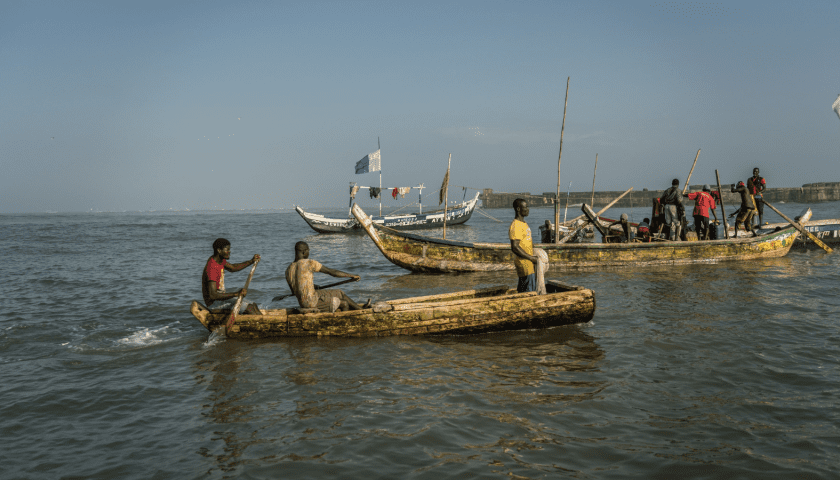
GHANA – Ghana is engaging China in talks aimed at resolving longstanding structural issues within its fisheries industry, with a focus on combating illegal, unreported, and unregulated (IUU) fishing.
On May 19, Emelia Arthur, Ghana’s Minister of Fisheries and Aquaculture, held discussions with Chinese Ambassador Tong Defa in Accra to explore areas for bilateral collaboration.
According to a statement from the Ministry of Fisheries, one of the key priorities in these talks is enhancing enforcement against IUU fishing, which continues to undermine Ghana’s marine resources.
The timing of the discussions is significant, as they follow the suspension of four Ghanaian-flagged industrial trawlers in April for engaging in IUU activities such as illegal transshipment, catching juvenile fish, and using unauthorized nets.
Although the vessels are registered locally, they are reportedly owned by Chinese companies, raising further questions about foreign control in a sector where such ownership is restricted by law.
This proposed partnership comes just a month after China became a signatory to the Port State Measures Agreement (PSMA), a global treaty aimed at fighting IUU fishing under the UN’s Food and Agriculture Organization.
However, critics remain skeptical of Beijing’s commitment, noting that China continues to be identified as the world’s leading IUU fishing offender despite its recent pledge to international protocols.
A 2021 investigation by the Environmental Justice Foundation revealed that nearly 90% of industrial trawlers operating in Ghana are under Chinese ownership, despite regulatory restrictions.
As a result, any formal cooperation between Ghana and China will likely depend on how transparent and enforceable the arrangements become, especially regarding vessel ownership and at-sea monitoring.
Ghana is estimated to lose around US$23.7 million (KSh 3.1 billion) annually due to illegal fishing, highlighting the economic urgency behind the government’s recent actions and diplomatic outreach.
Cameroon signs transparency charter amid fishing sector concerns
Meanwhile, Cameroon has officially joined the Global Charter for Transparency in Fisheries, reinforcing its intention to regulate its fishing sector more effectively.
The agreement, signed by the Ministry of Livestock, Fisheries, and Animal Industries earlier this month, aims to bring more openness to national fisheries operations and ensure legal and ethical seafood trade.
With over 212,000 people engaged in fishing activities and a coastline of about 400 kilometers, Cameroon relies heavily on artisanal fishing, which accounted for 84% of the nearly 300,000 tonnes of fish caught in 2022.
But like Ghana, Cameroon’s waters face increasing threats from foreign industrial vessels accused of operating in murky conditions and engaging in exploitative labor practices.
The Environmental Justice Foundation has received multiple reports of crew members alleging abuse and mistreatment aboard such ships, prompting further concern about oversight and enforcement.
Irène Guy Mimbang, a technical advisor at the fisheries ministry, said that while transparency will not resolve every issue overnight, it is a necessary step in shielding legitimate actors from harm.
Sign up HERE to receive our email newsletters with the latest news and insights from Africa and around the world, and follow us on our WhatsApp channel for updates.