
Hamad Port integrates dedicated berth, processing plants for national food stability
The site is engineered for full-scale autonomy, featuring its own electrical substations, cooling systems, and maintenance hubs to support continuous operation.
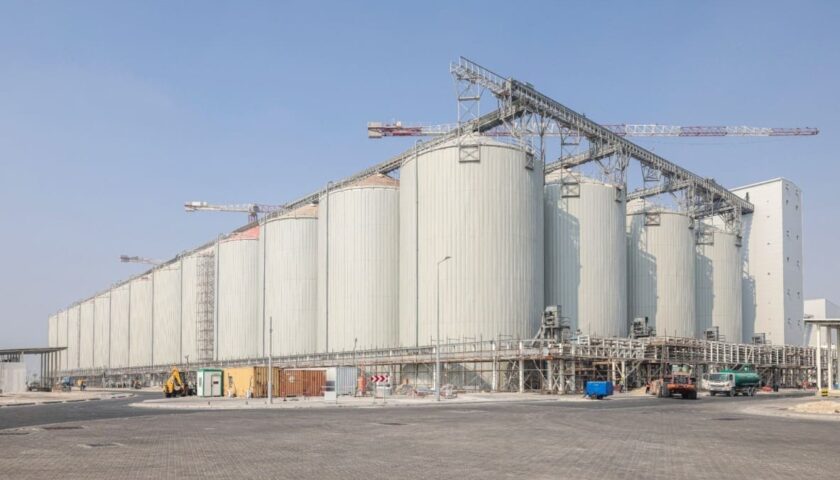
QATAR – The Hamad Port Strategic Food Security Facilities project has been developed with a dedicated berth measuring 575 metres in length and 12.5 metres in depth to receive specialized food cargo vessels, supported by approximately 500 metres of quay wall for unloading and cargo-handling operations
To begin with, the project comprises a comprehensive range of operational facilities, including a rice mill, an oil refinery, storage and packaging warehouses, oil storage tanks, and advanced handling, transport, packaging, and reloading systems.
Additionally, its location within Hamad Port enables direct integration of import, storage, processing, and distribution operations, ensuring rapid delivery of food products to local markets.
Infrastructure and Operational Autonomy
The site is engineered for full-scale autonomy, featuring its own electrical substations, cooling systems, and maintenance hubs to support continuous operation. Additional infrastructure includes administration and marine control buildings, central cooling facilities, and fueling facilities required for efficient and sustainable operations.
For fresh produce exporters and logistics operators, the dedicated berth and quay wall enable rapid unloading of refrigerated and dry food cargo, reducing vessel turnaround times and preserving cold chain integrity for perishable shipments.
Sustainability and Waste Reduction
In line with sustainability objectives, the project includes a specialized facility to recycle by-products generated from food commodity processing, converting them into animal feed and other products that comply with applicable standards and regulations.
Therefore, this centralized approach reduces transportation delays and repurposes industrial by-products into high-quality animal feed.
For logistics investors and fresh produce supply chains, the Hamad Port Strategic Food Security Facilities demonstrate how integrated port infrastructure can enhance food security.
Further, the dedicated berth reduces vessel turnaround times for food cargo vessels. The rice mill and oil refinery add value to imported commodities. The by-product recycling facility creates a circular economy model. On-site power, cooling, and maintenance ensure operational continuity.
As Qatar continues to invest in food security, this facility positions Hamad Port as a critical hub for managing essential commodity flows, reducing reliance on imported processed goods while ensuring food products reach local markets efficiently and with minimal waste.
Sign up HERE to receive our email newsletters with the latest news and insights from Africa and around the world, and follow us on our WhatsApp channel for updates.