

Japan’s fisheries value rises to US$11.54B
Industry sees 5% growth in value despite 2% decline in production; catches of key species fall sharply over the decade.
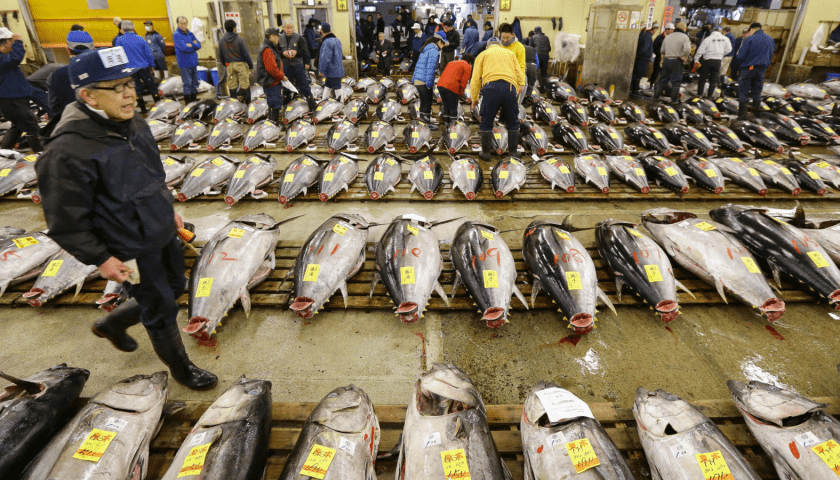
JAPAN – Japan’s fisheries industry saw a 5% increase in total production value in 2023, reaching US$11.54 billion (¥1.7 trillion), even as overall catch volumes dropped by 2% to 3.8 million tonnes.
The decline in production volume continues a long-term trend driven by falling catches of species like Pacific saury, Japanese common squid, and salmon, which have sharply declined over the past ten years.
The government’s 2024 White Paper on Fisheries reported that marine fishing generated US$6.54 billion (¥953.4 billion), up 4%, while marine aquaculture climbed by 10% to US$4.04 billion (¥595.6 billion), largely due to rising prices of products such as nori seaweed.
In contrast, inland fishing and freshwater aquaculture fell by 3% in value to US$925.76 million (¥136.3 billion), contributing to the continued overall decline in domestic seafood production.
Despite making up only 23% of the total volume at 880,000 tonnes, aquaculture accounted for 43% of the industry’s total value at US$4.86 billion (¥716.9 billion).
Japan’s self-sufficiency rate for edible seafood stood at 54% in fiscal 2023, two points lower than the previous year, continuing its long decline from the peak of 113% recorded in 1964.
Meanwhile, annual per capita seafood consumption was estimated at 21.4 kilogrammes, a slight decrease from the previous year, and nearly half the 2001 peak of 40.2 kilogrammes.
Imports steady, exports fall under pressure
Marine product imports held steady in volume at 2.2 million tonnes in 2024, but their value rose by 2.2% to US$14.26 billion (¥2.1 trillion), with China, Chile, and the United States remaining the top suppliers.
The most commonly imported items were salmon/trout, shrimp, and tuna/bonito, reflecting continued consumer demand.
Seafood exports declined more sharply, with volumes falling by 5.5% to 450,000 tonnes and the value dropping 7.5% to US$2.45 billion (¥360.9 billion).
A major factor in the export slump was China’s ongoing ban on Japanese seafood following the 2023 release of treated wastewater from the Fukushima Daiichi nuclear plant, though partial easing of the ban began in June 2024.
The report identified Hong Kong, the U.S., and Taiwan as the main export markets, with scallops, yellowtail (buri), and pearls being the top products shipped.
The paper also highlighted the impact of climate change, noting that combined catches of Pacific saury, squid, and salmon plunged by 80%, from 548,000 tonnes in 2014 to just 107,000 tonnes in 2023.
Sign up HERE to receive our email newsletters with the latest news and insights from Africa and around the world, and follow us on our WhatsApp channel for updates.