

Johannesburg High Court overturns planned seizure of plant-based meat alternatives
Published
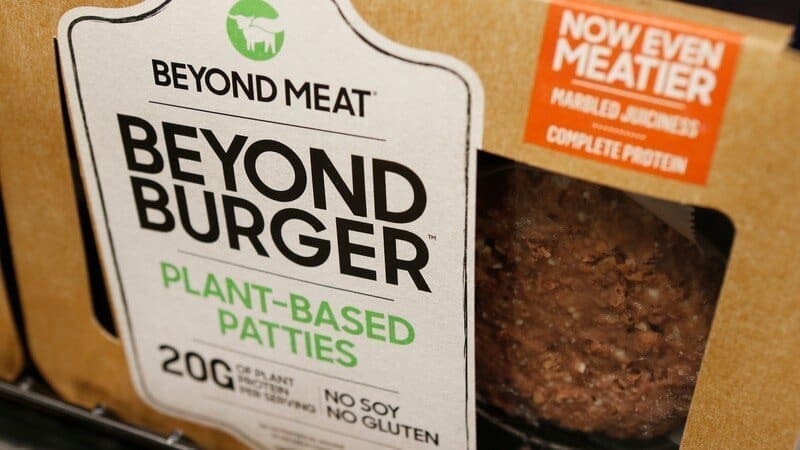
SOUTH AFRICA – The Johannesburg High Court recently overturned the planned seizure of plant-based meat alternatives that are marketed using “meat-like” terms in South Africa.
These products are set to remain permanently available on supermarket shelves all over the country.
In June 2022, South Africa’s Department of Agriculture, Land Reform and Rural Development (DALRRD) decided to ban the use of meat-like terms on plant-based product labels, asserting that it was misleading to consumers.
The department later instructed the Food Safety Agency to seize any non-compliant products.
This included banning items that had a naming resemblance to processed meat products like ‘nuggets’, ‘burgers’, ‘patty’, and ‘sausage’.
In response to this, plant-based advocates took the case to the Johannesburg High Court, successfully arguing that plant-based meat alternatives were not covered by legislation related to the classification and labeling of processed meats.
Consequently, the court temporarily halted the planned seizure of the products in August 2022.
Nearly a year later, the court halted the seizure again indefinitely, following a court victory for the Consumer Goods Council of South Africa (CGCSA) through the assistance of its attorney, Lauren Fine of Clyde and Co.
It was after the court’s thorough review that the decision to seize the meat alternatives was completely overturned by the court, which concluded that it was not legally enforceable.
The CGCSA views the court ruling in South Africa as a collective victory for the meat alternatives sector, which serves as “a source of employment throughout the value chain.”
ProVeg, a food awareness organization, has also expressed its support for the decision, saying “We appreciate the efforts by the CGCSA, and we hope that this latest development encourages DALRRD to meet with stakeholders in the plant-based space to discuss the issue further.”
According to ProVeg South Africa director Donovan Will, Plant-based meat alternatives are still a young industry, and it’s understandable that there is nuance and perhaps some confusion about it.
“Regulating a new industry can be complicated and challenging, particularly as it slots into the food and agriculture sector, but given the undeniable benefits, ProVeg sees this as an opportunity to leverage our international expertise and work with businesses and the government to ensure the successful and sensible regulation of these products and grow the industry as a bedrock for healthier alternatives and a job provider,” he added.
Liked this article? Subscribe to Food Business Africa News, our regular email newsletters with the latest news insights from Africa and the World’s food and agro industry. HERE
No related posts.