
Kenya calls for farmer-centred tea strategy as value addition, exports grow
Agriculture CS Mutahi Kagwe urged greater market diversification, local processing and investment to ensure Kenya and Africa retain more value from tea production.
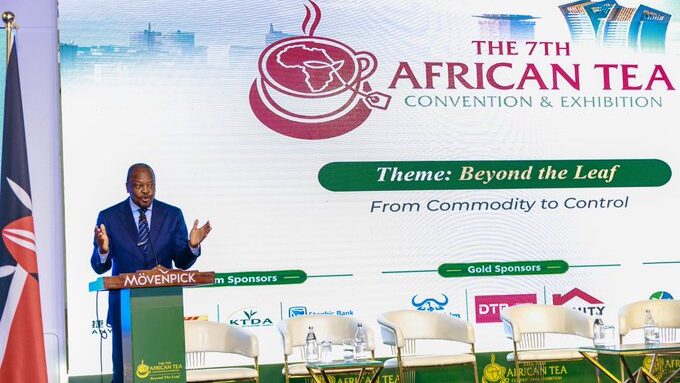
KENYA – Kenya has reaffirmed its commitment to transforming the tea industry into a more competitive, farmer-centred and value-driven sector, with Agriculture Cabinet Secretary Mutahi Kagwe calling for changes in how Africa produces, markets and benefits from tea.
Speaking at the opening of the 7th Africa Tea Convention 2026, Kagwe said the future of Kenya’s tea industry must begin with farmers, noting that most Kenyan tea is produced by small-scale growers whose livelihoods depend on the crop.
“It all begins with the farmers,” the CS said, stressing that discussions around tea must ultimately answer a fundamental question: what does the farmer gain from the sale of tea?
Kagwe said millions of livelihoods, including those of people who do not directly grow tea, are connected to the sector. He therefore linked the prosperity of tea-growing communities to the wider economy.
More than 800 delegates from 26 tea-growing and consuming markets are attending the three-day convention. Kagwe called for aggressive diversification beyond traditional tea destinations, identifying Pakistan as a leading business partner in Kenya’s tea trade.
He also welcomed China’s recent decision to zero-rate duties on tea entering its market, describing China as a major market with significant potential for Kenyan tea in different forms. However, he said accessing new markets alone would not be enough.
“It makes no sense to sell bulk tea to Europe and then follow the jobs to Europe that we ought to have created here,” Kagwe said, calling for Africa to retain more value from commodities through local processing, manufacturing and branding.
Boosting value addition
The CS called for stronger investment in value addition, new tea factories, modern machinery, technology and diversified tea varieties. He also encouraged partnerships that allow farmers to work with processors to develop higher-quality and market-specific tea products.
Kagwe urged farmers and investors to leverage the government’s land commercialisation initiative to expand tea production, while strengthening value-chain partnerships to attract investment and create employment.
On continental trade, he called for renewed efforts to strengthen the African Continental Free Trade Area (AfCFTA), saying Africa must remove barriers that prevent goods from moving efficiently across borders and build a larger continental market for African products, including tea.
He also urged countries to reconsider heavy tariffs and taxation on value-added agricultural products, arguing that value-added tea should be zero-rated to encourage processing, manufacturing, investment and job creation within Africa.
Kenya’s tea sector investment
Kagwe said Kenya’s tea strategy must move beyond producing tea to producing smarter, processing more, building stronger African brands and ensuring greater value reaches farmers.
Earlier this month, Agriculture Principal Secretary Paul Ronoh said the government had allocated KES10 billion ($77.3 million) to modernise smallholder tea factories, expand value addition and mechanise operations as it seeks to improve farmer earnings.
Kenya earned KES55 billion ($424.02 million) from tea exports during the first six months of 2026. Auction records show Kenyan tea fetched an average of $2.28 per kilogramme across the first 24 auction sales of the year.
Sign up HERE to receive our email newsletters with the latest news and insights from Africa and around the world, and follow us on our WhatsApp channel for updates.