
Kenya’s Nakuru County backs avocado farming to boost rural incomes and food security
With 91,000 seedlings distributed, Nakuru County intensifies its support for smallholder farmers as avocado farming gains ground across Kenya.
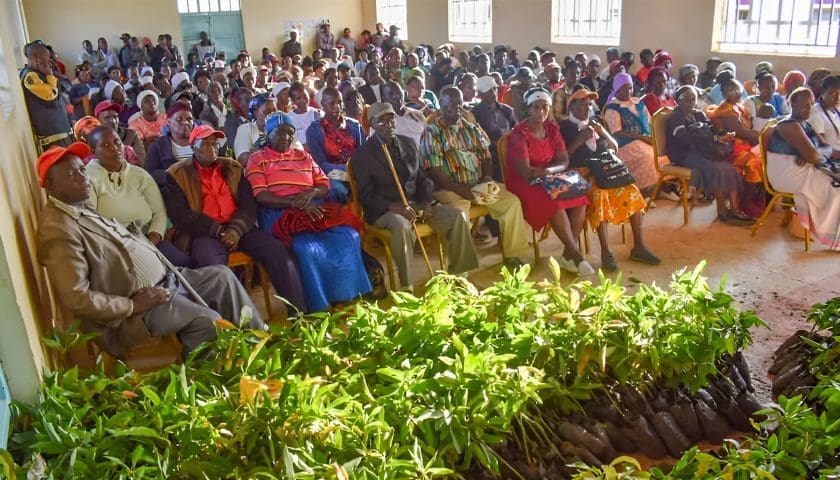
KENYA – Nakuru County has stepped up its investment in avocado farming by distributing 91,000 seedlings to local farmers, hoping to improve household incomes and support food security in the region.
County Executive for Agriculture Leonard Bor said the program, now in its second year, builds on earlier success and growing interest among farmers.
“In the 2023/2024 financial year, we distributed 60,000 avocado seedlings across 44 agricultural wards. Due to the success of that programme, we increased the number to 91,000 this year,” Bor said during a distribution event in Kuresoi North Sub-County.
Bor added that trained agricultural officers had been posted to every ward to help farmers adopt better planting and harvesting methods. The county also plans to hold field days to introduce climate-smart agriculture practices and provide technical support.
“We want to help our farmers grow crops that can thrive in changing weather and offer better returns in the long run,” Bor said.
Kenya is the second-largest avocado producer in Africa and sixth in the world. Small-scale farmers contribute 70 percent of the country’s total avocado output, mostly exported to markets in Europe and the Middle East.
Local farmers in Nakuru have welcomed the initiative. Jane Wanjiru, one of the beneficiaries, called the seedlings a long-term investment. “This is a gift that will benefit even our children,” she said.
Another farmer, Paulina Sang, praised the county government’s forward thinking, saying the program would improve both nutrition and incomes for many families.
In addition to avocados, the county has also distributed maize seeds and 1.2 million pyrethrum seedlings through joint efforts with the national government.
Transition to avocado farming in Bomet
The shift toward avocado farming is not limited to Nakuru. In neighbouring Bomet County, more farmers are also turning to avocados after years of depending on maize.
Grace Mutai, a farmer in Bomet, shared how she began her avocado venture by chance. “My entry into avocado farming was more of an accident. I overheard people discussing its potential in this region so I decided to try it. I bought four seedlings and planted them just to see what would happen. I haven’t looked back since then,” she said.
Despite early setbacks – only two of her first four seedlings survived – Mutai persisted. She later bought ten more from a certified nursery backed by the World Wide Fund for Nature (WWF) in Narok County. All ten survived and eventually produced fruit.
“When they finally did, I sold my harvest for KES 9000(US$69.44) to a hawker who paid me on the spot,” she said. “But I also learned that if I want better pay, I have to improve how I harvest, grade, and weigh them.”
Bomet County has distributed 200,000 Hass avocado seedlings under a subsidy program. Another 80,000 were provided by the national government and the Financing Locally Led Climate Action (FLoCA) programme.
The spread of avocado farming in Nakuru and beyond points to a larger shift in how counties are helping farmers move toward crops that respond better to both market needs and environmental change.
Sign up HERE to receive our email newsletters with the latest news and insights from Africa and around the world, and follow us on our WhatsApp channel for updates.