
Kenya’s sugar prices climb despite record first-half production
Rising retail prices highlight disconnect between stronger mill output and consumer costs.
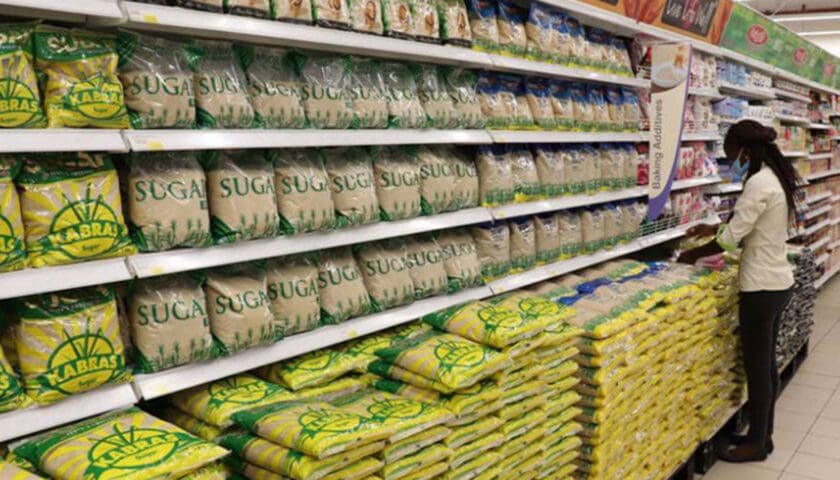
KENYA – Kenya’s average retail sugar price rose to KEs167.41 per kilogramme in July 2026, marking the fourth consecutive monthly increase despite a sharp recovery in domestic sugar production, according to data from the Kenya National Bureau of Statistics (KNBS).
The latest increase raises questions about whether the country’s stronger sugar output is translating into lower costs for consumers, as the government seeks to reform the industry through private investment and improved mill efficiency.
As reported by Business Daily, Kenya produced 437,852 tonnes of sugar between January and June 2026, representing a 35.2% increase from the same period in 2025 and the highest first-half production on record.
The latest figure surpassed the previous first-half peak of 410,536 tonnes recorded in 2022.
Cane deliveries to factories also increased substantially, rising 36.2% to 4.93 million tonnes during the first six months of the year.
The improvement points to a significant recovery in raw material availability following the sharp decline experienced by the industry in 2025.
Ordinarily, increased domestic production and cane availability would be expected to ease pressure on sugar prices by improving local supply and reducing dependence on imports.
However, retail prices have moved in the opposite direction.
Four months of rising prices
The average retail price stood at KES164.35 per kilogramme in April, when prices reached their lowest level of the year. Prices subsequently increased by 0.8% in May, 0.58% in June and 0.47% in July.
The trend marks a reversal from the sustained decline recorded between July 2025 and February 2026, when the average retail price fell from KES186.78 to KSh166.56 per kilogramme before declining further in April.
For food manufacturers, particularly confectionery, bakery and beverage producers, sugar prices remain an important input-cost consideration.
Persistent increases can feed into manufacturing costs and ultimately influence retail prices across a wide range of packaged food products.
Private mill management under scrutiny
The latest price movements also put renewed attention on Kenya’s ongoing sugar-sector reforms.
In May 2025, the government leased four state-owned sugar mills – Nzoia, Chemelil, Sony and Muhoroni – to private investors under 30-year agreements.
The arrangements were intended to attract investment, modernise ageing equipment and improve operational efficiency.
The recovery in cane supply and production suggests that parts of the industry are beginning to regain momentum.
However, the continued rise in consumer prices raises questions about how quickly improvements at the factory level are feeding through the wider value chain.
Sign up HERE to receive our email newsletters with the latest news and insights from Africa and around the world, and follow us on our WhatsApp channel for updates.