

Moroccan tomato exports fall 11% as weather, disease, port congestion disrupt season
The decline affects all markets for Moroccan tomatoes, with a 12% decline in Europe and the UK.
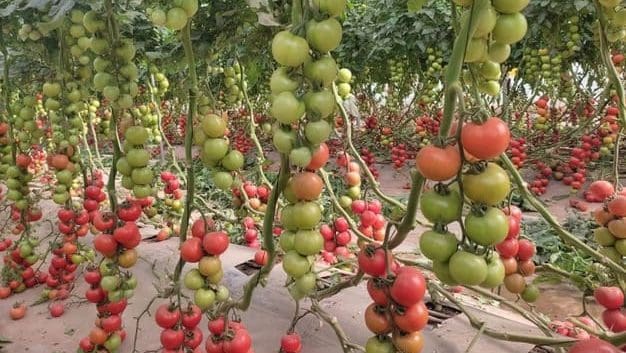
MOROCCO – Moroccan tomato exports fell 11% in the 2025-26 season to 549,000 tonnes, compared with 620,000 tonnes in the previous season.
The industry has endured extreme weather, pest pressure, and logistical bottlenecks that have reshaped decisions on growth and export capacity.
Storms, Disease, and Production Costs
Late February storms, followed by strong winds in April and May, left widespread destruction across the growing region.
According to Zakaria Hanich, president of the Federation of Fruit and Vegetable Producers and Exporters (FIFEL), rebuilding has progressed but at a high cost. “The prices of plastic film, other materials, and labour were extremely high. The cost of plastic has already dropped by two-thirds of its increase since February, but it remains higher than last year.”
Downy mildew and ToBRFV hit hard. While the industry has developed resistant varieties, yields remain low, at 150 tonnes per hectare, sometimes as low as 100 to 120 tonnes. “The direct consequence is a squeeze on margins, as lower yields mean higher production costs. We are at 5-6 dirhams (US$0.50-0.60) to grow one kilogram of tomatoes,” Hanich said.
Logistics Bottlenecks and Market Shifts
“Logistics have been very difficult, with blockages at the ports of Tanger Med and Algeciras, resulting in quality issues and penalties at the arrival of shipments,” Hanich added.
Exports of round tomatoes fell by 15%, while segment tomatoes dropped by 8%. The decline affects all markets for Moroccan tomatoes, with a 12% decline in Europe and the UK.
Many growers, especially small-scale operators, have shifted from tomatoes to peppers or berries. “There is a growing trend toward switching to pepper production because of the difficulties in tomatoes,” Hanich said.
Industry Perspective
Morocco’s tomato contraction signals supply gaps in European and UK markets that competitors may fill. “Supply gaps in the domestic market will become more frequent,” Hanich warned. “The selling price on the local market is lower than the cost of production.“
Hanich called for government intervention: “We have asked the government for more support for growers in this vulnerable sector. We consider export restrictions to be both punitive and ineffective. Growers urgently need government support in the form of production subsidies.”
As growers shift to peppers and berries, Morocco’s tomato export capacity may remain constrained into the next season, affecting both local supply and availability in the European market.
Sign up HERE to receive our email newsletters with the latest news and insights from Africa and around the world, and follow us on our WhatsApp channel for updates.

