
Mozambique starts US$150M Maputo dredging to handle larger vessels
Deepening to 15.3 metres allows vessels with greater draught to call directly rather than tranship or lighten cargo at anchorage.
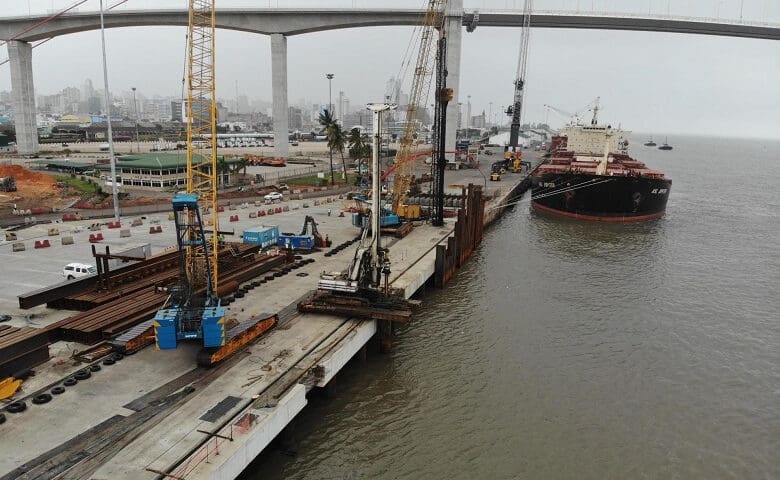
MOZAMBIQUE – Mozambique has launched a US$150 million dredging project at the Port of Maputo to deepen the access channel from 14.4 to 15.3 metres, enabling larger vessels to reach the port, according to the 2026-2030 Integrated Investment Program.
The work forms part of a broader modernization programme valued at approximately US$2 billion, which aims to expand port infrastructure and increase cargo capacity.
Trade growth and regional positioning
Maputo’s cargo volumes have risen from about 5 million metric tons in 2003 to nearly 27 million metric tons in 2022.
In 2025, the port handled approximately 32 million metric tons, up 3.4% from the previous year. The growth reflects Maputo’s role as an alternative to South African ports facing capacity constraints.
For instance, congestion at Durban Gateway Terminal, where average port calls stretched beyond 12 days in late August 2026, has redirected cargo toward Maputo and other regional gateways.
In addition, the port’s corridor serves South Africa’s Mpumalanga and Gauteng provinces, Eswatini and Zimbabwe, giving it a hinterland beyond Mozambican domestic trade.
Channel deepening addresses a specific constraint: at 14.4 metres, the current depth restricts access for larger container vessels and bulk carriers, limiting the port’s ability to compete for mainline services.
Therefore, deepening to 15.3 metres allows vessels with greater draught to call directly rather than tranship or lighten cargo at anchorage.
Private investment and inland connectivity
On land, DP World operates the container terminal under a concession and is implementing a US$165 million investment programme to increase annual capacity from 255,000 to 530,000 TEUs.
That expansion targets the container segment, complementing the dredging’s focus on vessel access.
Additionally, DP World extended its Maputo concession in 2025 and has invested in terminal equipment and in yard expansion.
Meanwhile, Maputo competes with Durban and Richards Bay for the same hinterland cargo, and its competitiveness depends on rail capacity, road conditions, and border clearance times at the Lebombo, Ressano Garcia, and Goba crossings.
The Nacala and Beira corridors provide alternative routes through Mozambique, though both face infrastructure constraints. However, Maputo’s advantage lies in its proximity to Gauteng, South Africa’s industrial heartland, which is closer by road than Durban.
Rail performance remains the principal risk. The Ressano Garcia line, linking Maputo to Komatipoort in South Africa, operates below its design capacity, while the Limpopo line serves Zimbabwe via Chicualacuala.
Sign up HERE to receive our email newsletters with the latest news and insights from Africa and around the world, and follow us on our WhatsApp channel for updates.