
Nigeria unveils livestock master plan to boost sector growth
Plan aims to attract government and private sector investments
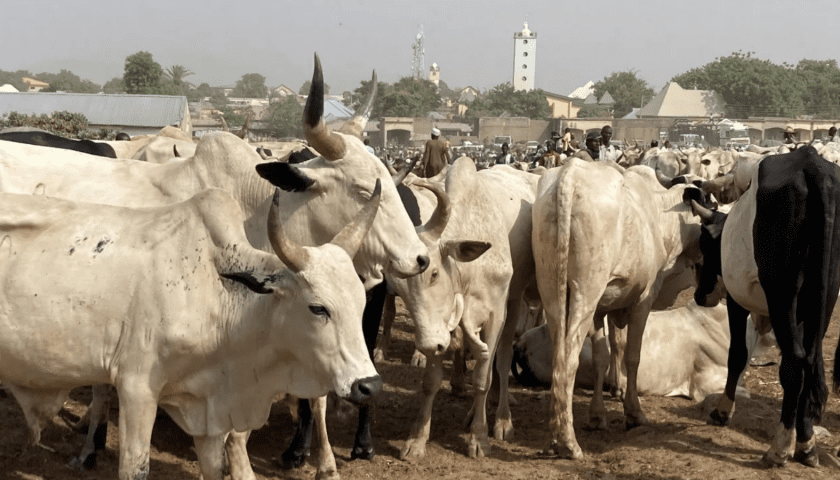
NIGERIA – The federal government has launched the National Livestock Master Plan (N-LMP) as part of efforts to address persistent challenges in the livestock sector and open avenues for new investment.
The initiative was prepared by the Livestock Productivity and Resilience Support Project (L-PRES) in partnership with the International Livestock Research Institute (ILRI) in Nairobi and the Bill and Melinda Gates Foundation.
The document was officially handed over to the minister of livestock development, Idi Maiha, by L-PRES national coordinator Sanusi Abubakar during a presentation in Abuja on Thursday.
Speaking at the event, Mr Maiha described the N-LMP as a structured roadmap intended to transform the livestock industry, which currently contributes about 17 percent to agricultural GDP and around five percent to the national GDP.
He said livestock remains central to the livelihoods of millions of Nigerians and is also critical in meeting the country’s demand for animal protein.
According to him, sector growth has been slowed by recurring problems including low output, animal diseases, poor infrastructure and weak access to markets.
Mr Maiha explained that the master plan will run for five years and will focus on targeted commodities and value chains, policy reforms, technology options and investment projections to guide the sector toward sustainable growth.
He added that the plan seeks to expand the sector’s role in poverty reduction, job creation, economic development, food and nutrition security, while also integrating women, young people and environmentally sustainable practices.
Citing examples from other countries, he pointed out that Tanzania adopted a similar approach in 2018 with ILRI support, which led to US$624 million (about 624m) in research-related investment and greater involvement of private companies.
He noted that the Nigerian framework is aligned with continental and global initiatives, including the Livestock Development Strategy for Africa, the Malabo Declaration and the Sustainable Development Goals.
Mr Maiha called on stakeholders across public and private institutions to support the plan and mobilise the investments required to strengthen the sector.
Mr Abubakar explained that the plan spans the full livestock chain, from feed production to breeding, and outlines the responsibilities of both national and state governments alongside private investors.
He stressed that private sector participation is regarded as essential in unlocking opportunities for food production, employment, poverty reduction and broader social stability.
Sirak Batha, a senior agricultural economist with ILRI, outlined four main elements of the plan, starting with an assessment of current sector conditions and key constraints.
He said the other components include a medium-term growth strategy based on forward-looking analysis, a short-term investment programme targeting specific value chains, and a coalition of public and private actors working together to implement reforms.
Sign up HERE to receive our email newsletters with the latest news and insights from Africa and around the world, and follow us on our WhatsApp channel for updates.