
North American pork producers call for cross-border trade protection
Canadian, U.S., and Mexican farmers express concern over trade barriers and seek continued market access
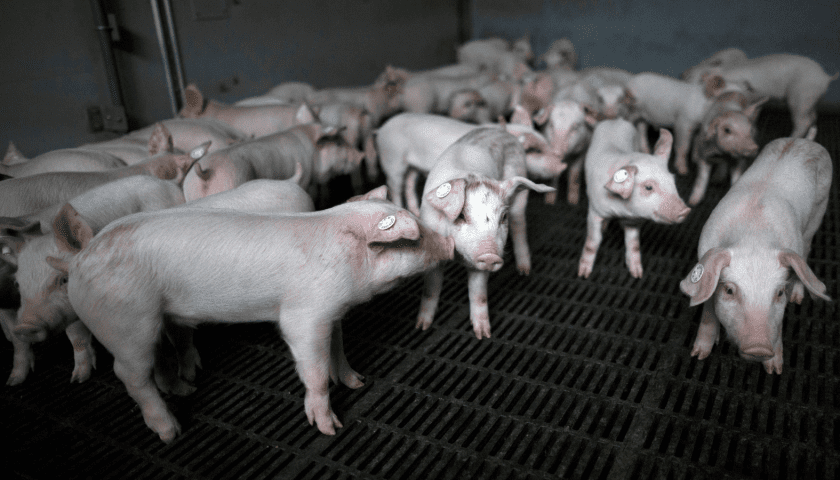
NORTH AMERICA – A Canadian delegation attending the 2025 World Pork Expo is voicing concern over potential trade barriers that could affect the movement of pork products across North America.
Led by Florian Possberg, a partner at Polar Pork Farms, the 11-member group from Humboldt, Saskatchewan travelled to Des Moines, Iowa to meet with U.S. industry players, Canadian colleagues, and key buyers.
Possberg said their objective was to highlight the need for stable trade relationships and to maintain communication across borders amid shifting trade policies.
He pointed out that pork production in Canada, the United States, and Mexico is closely linked, and relies on a system that moves animals, products, and feed with few restrictions.
This level of integration, according to Possberg, only works if free trade is protected from interruptions caused by tariffs or labeling regulations.
He added that nearly everyone involved in the pork supply chain — including farmers, processors, and exporters — wants to avoid the kind of restrictions that could complicate long-established trade routes.
Trade Tensions Risk Overspill into Pork Sector
Discussions about Canada-U.S. trade continue, with some American officials raising concerns about Canadian dairy and poultry policies, which are governed by supply management systems.
Possberg acknowledged these disagreements but said he hopes they do not lead to new limitations on pork, beef, or grain exports and imports.
He warned that unrelated trade disputes should not disrupt sectors like pork, where cooperation between countries has worked well for years.
Possberg stressed that any move to restrict trade in pork would have consequences beyond the farm, affecting processing, transportation, and access to markets.
The Canadian delegation, which included participants from three different generations, aimed to reflect the shared interest of pork producers in keeping supply chains intact.
Possberg also pointed out that healthy competition depends on a level playing field, which becomes difficult to maintain if regulations vary widely between countries.
He noted that integrated trade is not just about economics but also about long-term planning, efficiency, and food security for all three nations.
Sign up to HERE receive our email newsletters with the latest news and insights from Africa and around the world, and follow us on our WhatsApp channel for updates.

