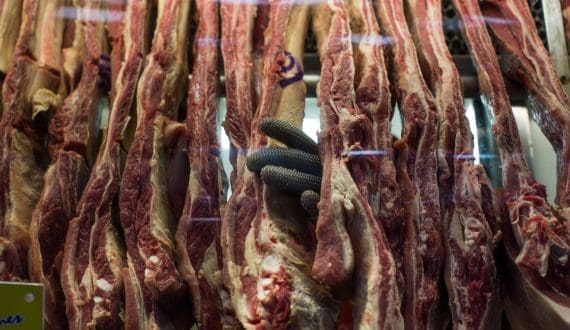

USDA adjusts 2025 meat, poultry production estimates amid record-high beef prices
Beef and poultry production projections rise while pork outlook falls; administration examines meat prices amid consumer concerns.

USA – The U.S. Department of Agriculture has raised its 2025 beef production forecast to 25.95 billion pounds, an increase of 194 million pounds from November, driven by faster slaughter rates and heavier dressed weights.
Average steer prices are expected to decline slightly to US$223.97 per hundredweight, down US$2, as beef imports and exports are projected to fall while domestic consumption rises.
Pork production has been lowered to 27.462 billion pounds, a reduction of 25 million pounds due to slower slaughter rates, with barrow and gilt prices decreasing by US$0.50 to US$68.58 per hundredweight.
Imports of pork are expected to increase, while exports and domestic consumption are forecast to decline, reflecting a tighter balance in the market.
Broiler production is projected at 48.086 billion pounds, up 121 million pounds from previous estimates based on pre-shutdown data, with prices holding steady at US$1.247 per pound.
Turkey output is forecast at 4.822 billion pounds, a gain of 15 million pounds compared to last month, following third-quarter production numbers, with prices rising slightly to US$1.352 per pound.
Egg production remains unchanged at 8.666 billion dozen, with an average price of US$3.794 per dozen, according to the USDA report.
Looking ahead to 2026, the agency anticipates increased production of pork, broilers, turkey, and eggs, while beef output is expected to decline.
The next USDA release of supply, demand, and production estimates is scheduled for January 12th.
Record-high beef prices have prompted attention from the Trump administration, as grocery bills have risen 32 percent monthly compared to 2019, according to the Urban Institute.
President Trump has signed an executive order identifying meat processors, seed suppliers, fertilizer manufacturers, and farm equipment companies as sectors vulnerable to price manipulation and anti-competitive conduct.
The order highlights potential risks posed by foreign-controlled companies, warning that such activities could disrupt the U.S. food supply and affect affordability.
Major meatpackers with international ownership, including Brazil’s JBS and China’s WH Group, which owns Smithfield Foods, have come under increased scrutiny for their influence on domestic markets.
Earlier in 2025, WH Group separated Smithfield’s North American operations amid concerns over foreign control in U.S. agriculture.
Industry representatives emphasize that high retail beef prices coincide with financial challenges for processors, who face supply shortages due to limited cattle availability.
Tyson Foods announced plans to lay off over 4,000 employees and close one of its largest beef plants, citing supply constraints as a key factor.
Julie Anna Potts, CEO of the Meat Institute, said that beef packers have been operating at a loss for more than a year despite strong consumer demand, as cattle costs remain at record levels.
The administration has also lifted tariffs on selected food products, including beef and coffee, in an effort to reduce costs for consumers.
Sign up HERE to receive our email newsletters with the latest news and insights from Africa and around the world, and follow us on our WhatsApp channel for updates.