
West African coastal communities face shrinking fish stocks, eonomic strain, report shows
Warming oceans and illegal Chinese trawling are driving fish populations away from local waters.
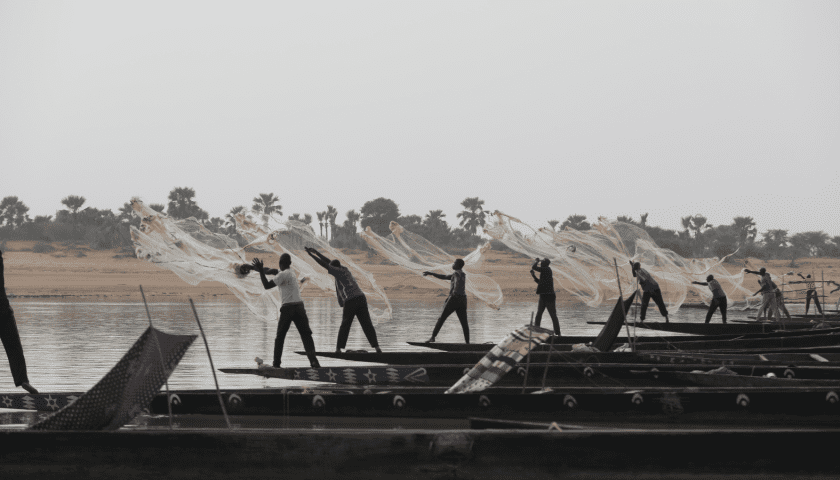
WEST AFRICA – A new report warns that climate change and illegal fishing are putting West Africa’s coastal fishing communities at growing risk, as their primary fish stocks continue to shrink.
Released on May 1, 2025, by the Salata Institute for Climate and Sustainability at Harvard University, the report details how artisanal fishermen along the Gulf of Guinea are struggling to maintain their livelihoods due to dwindling populations of small pelagic fish.
According to the study, catches of these fish—central to food security and employment in the region—dropped by 59% in Ghana between 1993 and 2019, and by 40% in Côte d’Ivoire from 2003 to 2020.
The long-term decline is linked in part to ocean warming, as the oceans absorb most of the excess heat from greenhouse gas emissions, leading to lower oxygen levels and less food for fish.
This warming trend is altering the movement of key fish species, forcing them to migrate further from the coasts where they were once abundant.
One species, Sardinella aurita, has shifted its range by an average of 181 kilometers per decade since 1995, with other small pelagic fish also showing similar patterns.
The report adds that under the most extreme emissions scenario, sea surface temperatures in the Gulf of Guinea could climb by 3°C between 2010 and 2099, while even moderate warming could push temperatures up by 1.6°C during the same period.
In addition to climate pressure, illegal fishing by foreign-owned industrial vessels is accelerating the crisis, particularly those linked to Chinese companies.
Though China officially lists only 2,600 distant-water vessels, independent estimates suggest there may be nearly 17,000 operating globally, many of which have been documented violating West African fishing zones.
These trawlers often encroach on areas set aside for local fishermen, using bottom trawling methods that damage ecosystems and deplete fish populations.
Meanwhile, local artisanal fleets have grown in both size and capacity, increasing pressure on already-stressed fish stocks.
While several governments, including Ghana and Côte d’Ivoire, have imposed seasonal fishing bans since 2016, these efforts have not significantly slowed the decline in catches.
The report concludes that even if illegal fishing is reduced, the long-term effects of ocean warming are likely to continue driving down fish availability and catch volumes.
Sign up HERE to receive our email newsletters with the latest news and insights from Africa and around the world, and follow us on our WhatsApp channel for updates.