Wageningen researchers uncover RuBisCO-rich protein ingredient from tomato leaves
Tomato foliage could complement other sustainable sources like duckweed in offering renewable feedstock for future protein powders and functional ingredients.
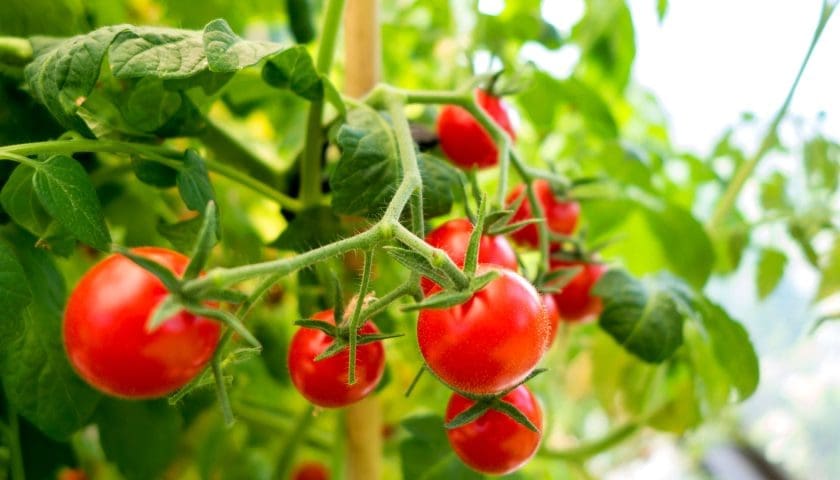
The Netherlands – Scientists at Wageningen University & Research have identified tomato leaves as a promising new protein source for the food industry, containing up to 27% protein with RuBisCO, the key photosynthetic enzyme, making up 15–20% of the total.
RuBisCO is under global scrutiny as a sustainable, plant-based protein ingredient. Much of the focus has been on duckweed, which received EFSA approval as a food-safe protein concentrate.
Now, tomato foliage, long treated as waste, could offer another high-volume, renewable feedstock for future protein powders and functional ingredients.
“RuBisCO is the most abundant protein in leafy material,” explained lead researcher Dr. Marietheres Kleuter. “Because it binds CO₂ inefficiently, plants produce it in very high concentrations. If we can extract it efficiently, we gain access to a rich, untapped protein stream.”
Tomato cultivation is especially suited to valorization. Greenhouse-grown plants produce continuous leaf biomass year-round, as growers routinely prune lower leaves to optimize fruit production.
This steady supply makes protein recovery logistically attractive for ingredient manufacturers.
The team extracted protein by blending tomato leaves with water, adjusting pH to alkaline levels to dissolve proteins, and separating fiber from protein fractions.
The resulting material is a green protein concentrate, suitable for supplements and functional foods but less compatible with products where color neutrality is critical, such as tofu or dairy alternatives.
Leaf age also matters. Younger leaves yielded more protein than older, pruned leaves, suggesting that cell wall changes and protein degradation reduce extractability as leaves mature.
Although promising, Kleuter estimates commercial applications are at least 10–15 years away. Improving protein purity without losing yield and reducing costs will be critical before tomato leaf protein can move from research to market.
Kleuter suggests that targeted breeding could help overcome these limitations.
This would enable the negative changes in the cell wall composition to be mitigated, and additional senescing processes, including the degradation of proteins, to be decreased, leading to increased extraction potential of proteins from older leaves.
“The first task is to identify the barriers that are responsible for low protein extraction yields, and then find the genetic base that defines such barriers,” Kleuter said.
She adds that this approach could apply far beyond tomatoes: “There is scope to turn almost any kind of crop into something with dual functionality, so that it is not just about the fruit, but also about making use of the parts that have historically been considered waste.”
Sign up HERE to receive our email newsletters with the latest news and insights from Africa and around the world, and follow us on our WhatsApp channel for updates.