

Brazil records highest-ever cattle slaughter in 2025 – CEPEA
Export demand absorbs increased beef supply
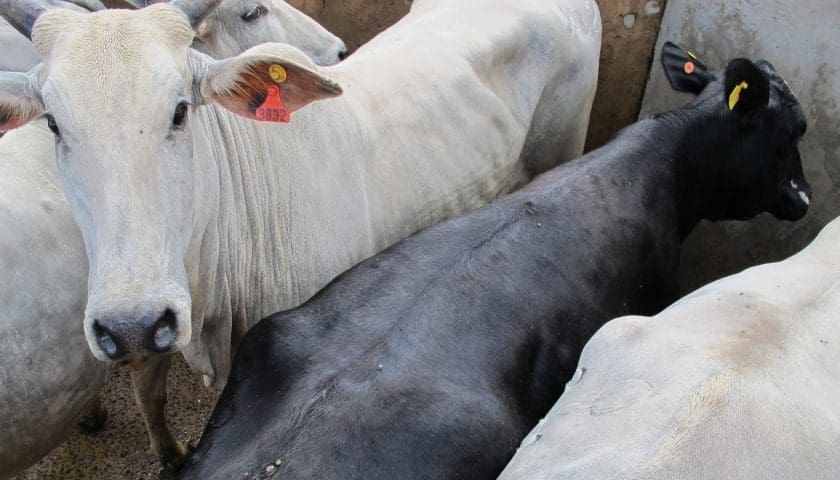
BRAZIL – Brazil processed a record 42.5 million head of cattle in 2025, representing an 8.2% rise from the previous year, according to figures released by the Brazilian Institute of Geography and Statistics and cited by Centre for Advanced Studies on Applied Economics.
The latest total also stands 24.6% above the 2023 figure and 42.6% above 2022 levels, reflecting expanded investment in Brazil’s cattle industry since 2020, the progression of the livestock cycle, and the large number of female animals sent for slaughter.
Even as slaughter volumes increased, the availability of beef in the short term, along with overseas demand, helped absorb the additional supply and prevented significant downward pressure on prices during 2025.
Beef output also climbed during the year, exceeding 11 million tonnes and marking a 7.9% increase compared with 2024 alongside gains of 24% over 2023 and 37.9% over 2022.
The rise in production was linked not only to the higher number of cattle processed but also to ongoing expansion within Brazil’s livestock sector as producers continue adopting improved production methods and technology while export markets remain active.
Productivity trends
Despite the growth in total output, average carcass productivity declined slightly in 2025 as the increased share of cows and heifers sent to slaughter reduced the overall yield per animal.
Across the national herd, which includes cows, heifers, steers, and other cattle categories, average productivity reached 258.69 kilograms per head in 2025, a drop of 0.84% from 2024 but still marginally higher than both 2023 and 2022 by 0.42% and 0.78% respectively.
Export outlook and China quota
Earlier this year, analysts at the Centre for Advanced Studies on Applied Economics reported that Brazil could reach its full annual beef export quota to China as early as September if shipments continue at the same pace.
Shipments during January 2026 totalled 119,630 tonnes of beef destined for China, which marked the largest volume ever recorded for the first month of a calendar year.
The rise in exports has occurred despite new safeguard measures introduced by China in December that impose a 55% tariff on beef shipments exceeding a specified quota, compared with the standard 12% duty applied within the limit.
Under the revised rules, exporters from Brazil, Argentina, Uruguay, and the United States are affected, with Brazil allocated a ceiling of 1.106 million tonnes for 2026.
Brazil’s Ministry of Agriculture warned in an internal document obtained by Folha de S. Paulo that uncoordinated exports could disrupt trade flows and potentially push domestic beef prices and employment downward.
Authorities are therefore proposing a national quota allocation system that would determine how much each exporting company can ship to China within the annual tariff limit.
Officials stated that without a coordinated approach, large processors could rush to secure early-year contracts, leaving smaller exporters with limited access to the quota while increasing the risk of domestic price declines.
Among the companies with significant exposure to the Chinese market are JBS, Minerva Foods, and Marfrig, which collectively control a major share of Brazil’s beef shipments to China.
Government analysis also indicated that Chinese demand for imported beef could fall by around 35% under the safeguard measures, representing an estimated reduction of roughly 600,000 tonnes in global trade volumes and raising concerns among Brazilian producers.
Sign up HERE to receive our email newsletters with the latest news and insights from Africa and around the world, and follow us on our WhatsApp channel for updates.