Ghana sets minimum mango price at US$0.50/ Kg for 2026 major season
The measure aims to stabilize the market while fostering rural economic growth across Ghana’s expanding tree-crop industry.
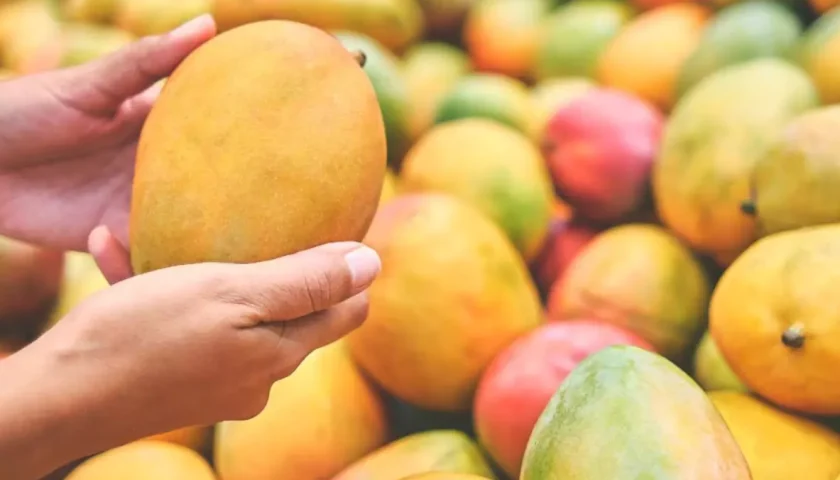
GHANA – The Tree Crops Development Authority has announced a minimum producer price of GH¢5.22 per kilogram (US$0.50/kg) for second-grade fresh mangoes for Ghana’s 2026 major season, determined in consultation with the Federation of Associations of Ghanaian Exporters and other value chain participants.
Ghana’s new mango regulations aim to support fair pricing, enhance export competitiveness, increase transparency in the marketing of selected tree crops, and strengthen sector regulation.
The decision aligns with Section 3(f) of the Tree Crops Development Authority Act, 2019 (Act 1010) and with Regulation 47(1) of the Tree Crops Regulations, 2023 (L.I. 2471). Thus, the measure aims to stabilize the market while fostering rural economic growth across Ghana’s expanding tree-crop industry.
On the other hand, pricing policies affect mango quality grades differently. For instance, second-grade fresh mangoes are sold at the mandated minimum price of US$0.50 per kilogram. While producers supplying first-grade mangoes may negotiate prices above the minimum producer price to encourage quality production.
Furthermore, premium-quality mango producers retain the right to negotiate even higher rates, creating incentives for investment in orchard management and post-harvest handling.
Several stakeholders and crops fall under the TCDA’s regulatory authority. The Authority currently regulates six selected tree crops in Ghana, including mango, coconut, and cashew.
As a result, all operators across the selected tree crop value chains must register and obtain licenses in accordance with existing regulations. The registration and licensing process aims to improve standards, strengthen traceability, support quality assurance, and reinforce sector regulation.
For stakeholders in the fresh produce sector, Ghana’s mango pricing policy illustrates how regulatory frameworks can balance the protection of farmers with competitiveness in export markets.
The two-tier approach, that is, a mandated minimum for second-grade fruit and negotiated pricing for premium grades, encourages quality improvement while providing a safety net for lower-grade produce.
Investors should note that mandatory registration and traceability requirements may increase compliance costs for small operators and could create barriers to entry that benefit larger, established exporters.
Ghana’s mango sector continues to expand, contributing to export revenue, rural employment, and agro-industrial activity. However, the effectiveness of the minimum price will depend on enforcement capacity and buyers’ compliance with the mandate.
Sign up HERE to receive our email newsletters with the latest news and insights from Africa and around the world, and follow us on our WhatsApp channel for updates.